Advent
Holidays & seasons · Updated August 15, 2026
Overview
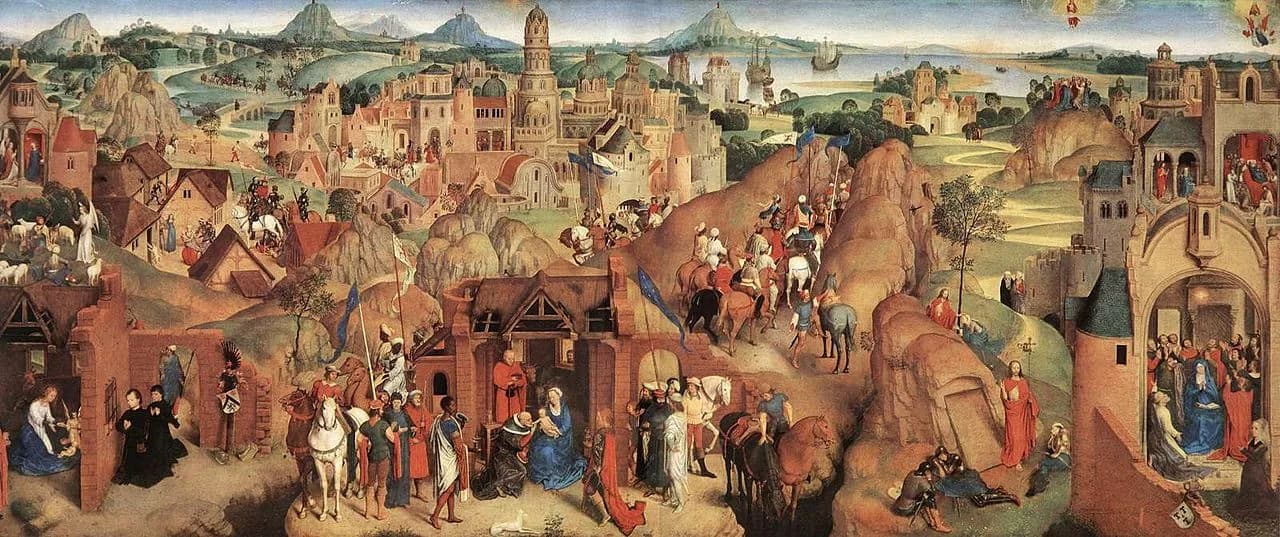
Advent originally had no connection to Christmas and was a separate season of preparation for Epiphany. The early Church's calendar did not include a unified celebration of Christ's birth until the fourth century, long after The Council of Nicaea in 325 AD had resolved other theological matters. Advent's initial focus was on preparing for Epiphany, a feast celebrating the revelation of Christ to the Gentiles, particularly symbolized by the visit of The Magi. Modern observers typically view Advent as a countdown to December 25th, but this association developed centuries later.
The first mention of Advent dates back to the Council of Saragossa in 380 AD. This early reference shows Advent's existence as a distinct liturgical season. By the 5th century, it was observed in Gaul and Spain, primarily as a Fasting period before Epiphany, rather than Christmas. This practice involved a spiritual preparation akin to Lent, focusing on penance and reflection. It was not until the 6th century that Advent was formally integrated into the Roman liturgical calendar, marking a shift towards a unified liturgical practice across Western Christianity. This integration was partly influenced by the need to establish a consistent Church calendar, which would aid in unifying Christian practice across diverse regions. The Roman adoption also began the slow transformation of Advent into a season anticipating Christmas, as the Church increasingly emphasized the Nativity of Christ.
The foundation of Advent lies in several biblical passages that highlight themes of anticipation and preparation. Isaiah 9:6 declares, "For to us a child is born," a prophecy that foreshadows the coming of Christ and is central to Advent's message. Similarly, Matthew 24:44 states, "be ready, for the Son of Man is coming," commanding vigilance in awaiting Christ's return. Luke 3:4-6, with John the Baptist's call to "prepare the way for the Lord," echoes the Advent call to spiritual readiness. Romans 13:11-12, which urges believers to "wake up from your slumber," further emphasizes spiritual vigilance. While some traditions focus on the joyous anticipation of Christ's birth, others, like the Orthodox Church, emphasize the somber preparation for His return, giving the season a dual nature.
Theologically, Advent embodies the 'already and not yet' tension in Christian eschatology, pointing both to the historical birth of Jesus and His anticipated second coming. It asks believers to engage in spiritual preparation, reflecting on past fulfillment and future hope. Catholic tradition, shaped by figures like St. Bernard of Clairvaux, emphasizes the threefold coming of Christ: in history, in mystery, and in majesty. Protestants, influenced by figures like Martin Luther, often focus on the personal and communal readiness for Christ's return, emphasizing scripture and faith. The Orthodox Church, with its rich liturgical heritage, stresses the eschatological aspect, viewing Advent as preparation for the ultimate fulfillment of God's promises. These varied interpretations give Advent its theological breadth, inviting believers to a deeper spiritual journey.
Today, many believe Advent is solely about preparing for Christmas, overlooking its eschatological dimension. This misunderstanding is fueled by the commercial aspects of the season, with Advent calendars filled with chocolates rather than reflections on Christ's coming. However, traditional practices like lighting the Advent wreath candles each Sunday still persist, symbolizing hope, peace, joy, and love. These rituals provide physical expressions of Advent's meanings. The debate about Advent's commercialization continues within Christian communities, with some churches advocating for a return to the season's spiritual roots. Advent begins on the Sunday closest to November 30th, the feast of Saint Andrew, and invites reflection on both the historical and future aspects of Christ's coming.
Why Fighting Over Advent Was a Big Deal
The battle over how to observe Advent was never just about candles or calendars; it was a struggle over who held the authority to shape Christian rituals and what those rituals should signify. This debate was about the identity of the Christian faith itself. Different factions within Christianity were not merely squabbling over liturgical details; they were wrestling with questions of tradition and modernity. Disputes mirrored broader struggles within the church about how to balance the preservation of age-old customs with the need to adapt to changing times. Authority was a fundamental issue: who had the right to decide how Christians should prepare for one of the central events in their faith?
The Vatican II Council, held from 1962 to 1965, became a focal point for these debates. At the council, key figures representing different factions made their cases. Pope Pius IX, a staunch Traditionalist, argued for a strict adherence to historical liturgical practices, seeing this as essential to maintaining the sanctity and continuity of Christian rituals. On the other side, Martin Luther, a key figure among Reformists, pushed for updates to Advent practices to make them more relevant to contemporary believers. Meanwhile, Archbishop Desmond Tutu represented the Ecumenicals, advocating for Advent to serve as a unifying time for all Christian denominations. Each camp had much at stake: Traditionalists sought to protect the integrity of long-standing rituals, Reformists aimed to connect with modern believers, and Ecumenicals hoped to foster a sense of global Christian unity. Changes were implemented, but not without sparking further debate and leaving some feeling that their vision was sidelined.
The conflict over Advent's observance remains unresolved because it touches on enduring questions of religious authority and identity. As society continues to evolve, so do the challenges faced by the church in defining its practices. This ongoing evolution makes it difficult to reach a definitive resolution. The dialogue around Advent is not just a historical footnote; it is a living conversation that reflects the dynamic nature of faith in a changing world. Even today, as churches worldwide light Advent candles or open calendar doors, the underlying tensions about who decides and how remain a poignant reminder of the complexity of religious tradition.
Continue reading with a Scholar plan
Upgrade to ScholarCommon questions
- What is Advent and why is it celebrated?
- Advent is a season observed by Christians as a time of expectant waiting and preparation for the celebration of the birth of Jesus at Christmas. It originally began as a period for preparing new Christians for baptism and has evolved to focus on anticipating Christ's birth and eventual return.
- How is Advent different from Christmas?
- Advent is a period of preparation and anticipation leading up to Christmas, which celebrates the birth of Jesus Christ. While Advent is marked by reflection and expectation, Christmas is a celebration of the Nativity.
- What are the four themes of Advent?
- The four themes of Advent traditionally focus on hope, peace, joy, and love, each represented by a candle on the Advent wreath.
- Why do some Advent calendars start on December 1st?
- Some Advent calendars start on December 1st to provide a consistent and easy-to-follow countdown to Christmas, regardless of the varying start date of Advent each year.
- What is the significance of the Advent wreath?
- The Advent wreath is a circular garland of evergreen branches with four candles, symbolizing the passage of the four weeks of Advent. Each candle represents one of the four themes of Advent: hope, peace, joy, and love.
- How do you observe Advent at home?
- Advent can be observed at home by lighting an Advent wreath, using an Advent calendar to count down the days, and engaging in daily prayers or reflections focused on the themes of the season.
- Why do Advent candles have different colors?
- Advent candles typically have different colors to represent different themes: three purple candles for hope, peace, and love, and one pink candle for joy, which is lit on the third Sunday of Advent.
- What is the history of the Advent season?
- Advent began in the 4th century as a time for preparing new Christians for baptism and was initially linked to the January feast of Epiphany. Over time, it evolved into a season anticipating the birth of Jesus, with its duration shortened to four weeks by the Middle Ages.
- How does Advent prepare Christians for Christmas?
- Advent prepares Christians for Christmas by encouraging reflection, prayer, and anticipation of Jesus' birth, helping believers focus on the spiritual significance of the holiday.
- What are common Advent traditions around the world?
- Common Advent traditions include lighting Advent candles, using Advent calendars, attending church services, and engaging in acts of charity and reflection.
- Why do some churches begin Advent on different dates?
- Advent begins on the fourth Sunday before Christmas, which means its start date varies each year. This variation can lead to differences in when churches begin their observance.
- What role does the Advent calendar play in the celebration?
- The Advent calendar helps count down the days to Christmas, often including small gifts or scripture readings to mark each day, enhancing the anticipation and preparation for the holiday.
- What prayers are said during Advent?
- Prayers during Advent often focus on themes of hope, peace, joy, and love, asking for spiritual readiness and reflection as believers prepare for the celebration of Christ's birth.
- How did the early church establish the Advent season?
- The early church established Advent in the 4th century as a time for preparing new Christians for baptism, initially linked to the Epiphany, and later evolved to focus on anticipating Christ's birth.
- What is the meaning behind the Advent hymns?
- Advent hymns often express themes of anticipation, hope, and preparation for the coming of Christ, reflecting the spiritual journey of the season.