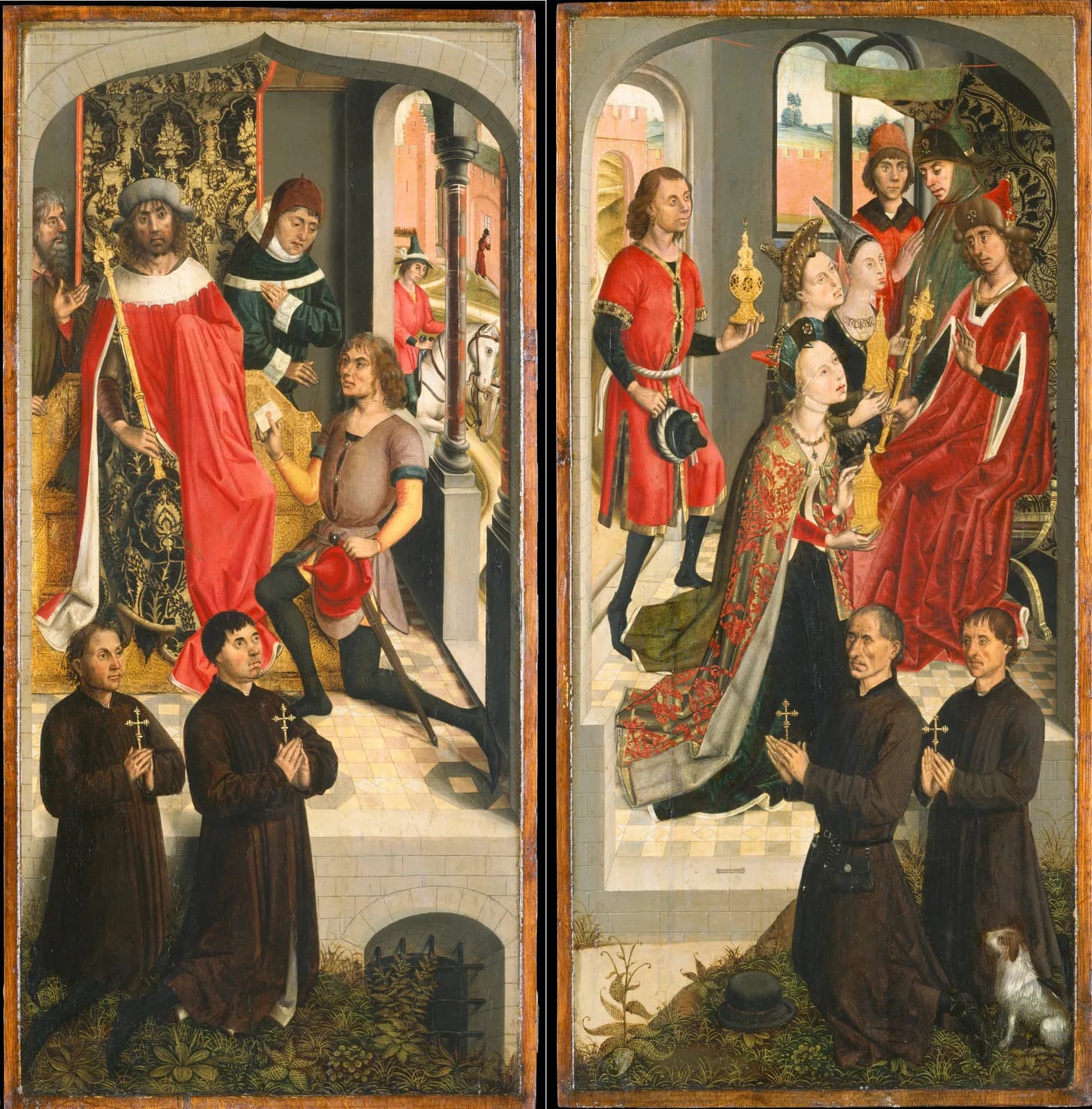
The Story of David
David emerges from the pastoral landscapes of Bethlehem, a humble shepherd in a world where tribal affiliations and divine mandates shape destinies. Bethlehem, later renowned as the birthplace of the Messiah, is where David first tends his flock, unaware of the monumental path ahead. The prophet Samuel's visit to Bethlehem marks a turning point. Despite being the youngest of Jesse's sons, God chooses David, and Samuel anoints him as the future king of Israel (1 Samuel 16:13). This divine selection, set against the backdrop of Saul's faltering reign, sets the stage for a complex narrative of kingship, conflict, and covenant.
David's journey is marked by his audacious confrontation with Goliath, the towering Philistine warrior. Armed only with a sling and a stone, David's triumph (1 Samuel 17:49) not only showcases his faith and valor but also cements his reputation as a formidable warrior. Yet, his rise to prominence becomes fraught with tension as King Saul, tormented by jealousy, perceives David as a threat. Despite Saul's relentless pursuit, David's integrity shines through when he refuses to harm the king, even when presented with the opportunity in the cave at En Gedi (1 Samuel 24:4-7). This act of restraint, motivated by respect for Saul as the LORD's anointed, highlights David's complex relationship with his predecessor.
The turning tides in David's narrative come with his ascent to the throne. After Saul's death, David becomes king over all Israel (2 Samuel 5:3), uniting the tribes and establishing Jerusalem as the nation's political and spiritual heart. However, his reign is shadowed by personal failings, most notably his affair with Bathsheba. The adultery and orchestrated death of her husband, Uriah (2 Samuel 11:4), bring devastating consequences. Nathan the prophet confronts David, delivering God's judgment and foretelling turmoil within David's household (2 Samuel 12:10-12). The rebellion of his son Absalom and the ensuing familial strife highlight the fragility of David's house.
In the twilight of his life, David's legacy extends beyond his own reign. He is remembered not only as a warrior and king but also as the sweet psalmist of Israel, with his compositions forming a large portion of the Psalms. His lineage carries implications, as he is named an ancestor of the Messiah in the genealogies of Matthew 1:1 and acknowledged in Luke 1:32. The promise of an everlasting kingdom through David's line (2 Samuel 7:16) echoes into the New Testament, where he is invoked in discussions of redemption and kingship, as seen in Acts 2:29-36 and Revelation 5:5. David's story, with its peaks and valleys, is etched into the fabric of biblical history, defining a covenantal legacy that transcends his own era. The Hebrew word כָּלֵב (kalev), meaning "wholehearted," captures an essential aspect of David's character. Although this term does not directly appear in the narratives about David, it echoes the essence of his relationship with God, as seen when the prophet Samuel anoints David, chosen for his heart rather than his external appearance (1 Samuel 16:7). David's wholeheartedness manifests in his actions — whether as the young shepherd choosing to face Goliath with faith over weaponry (1 Samuel 17:45) or the devoted worshiper dancing with abandon before the Ark of the Covenant (2 Samuel 6:14). This wholehearted devotion defines David's kingship, extending beyond his military prowess to his role as a psalmist, whose poetry in the Book of Psalms expresses deep trust and longing for God, as seen in verses like Psalm 23:1, "The Lord is My Shepherd; I shall not want."