Bible study / Biblical figures / Enoch

Old Testament

Enoch

Antediluvian (undated, 7th generation from Adam)

translation without deathwalking with Godprophecyapocalyptic visionrighteousness

The Story of Enoch

In the antediluvian world of Genesis, where lifespans stretched for centuries and human wickedness grew unchecked, Enoch emerges as a figure of stark contrast. Born to Jared, Enoch stands in the seventh generation from Adam, a number symbolizing divine completeness. His life unfolds during a time when humanity's moral decay was setting the stage for the Great Flood. Yet, Enoch's path diverges dramatically from the norm. At sixty-five, he fathers Methuselah, who would later be known for his extraordinary longevity. The Bible notes that after Methuselah's birth, Enoch "walked with God" for three hundred years (Genesis 5:22), a phrase that hints at an intimate, continual relationship with the divine, setting Enoch apart in a world increasingly estranged from its Creator.

This deep connection with God becomes the defining feature of Enoch's life. Unlike his contemporaries, Enoch's faith and obedience are unwavering, as suggested by Genesis 5:24, which states, "Enoch walked with God, and he was not, for God took him." This succinct but profound verse upends the typical narrative of mortality that defines the antediluvian genealogy, where each entry concludes with "and he died." Enoch's translation — his being taken by God without experiencing death — highlights an exceptional divine favor. This act of God not only breaks the rhythm of death but also prefigures later theological concepts of eternal life, marking Enoch as a singular figure in biblical history.

Enoch's life reaches beyond personal piety into the realm of prophecy. The New Testament, specifically in Jude 14-15, attributes to Enoch a vision of apocalyptic judgment: "Enoch, the seventh from Adam, prophesied, saying, 'Behold, the Lord comes with ten thousands of his holy ones.'" This prophetic role underscores Enoch's righteousness and his significance in the biblical narrative. His foresight into divine judgment places him in a prophetic tradition that warns of consequences for ungodliness, adding a layer of urgency and gravity to his story. Enoch thus stands as a harbinger of divine intervention, paradoxically both a product of his era and a voice speaking beyond it.

The implications of Enoch's story ripple through time. His translation without death is referenced in the New Testament, notably in Hebrews 11:5, which states, "By faith Enoch was taken up so that he should not see death." This mention situates Enoch within the broader narrative of faith exemplars, highlighting his enduring impact on theological thought. Additionally, Enoch appears in the genealogy of Jesus in Luke 3:37, linking him directly to the lineage of Christ. This genealogical placement underscores Enoch's lasting significance, bridging the ancient world and the narrative of salvation history.

Who Was Enoch

The Hebrew word הִתְהַלֵּךְ (hithalekh), meaning "walked," is central to understanding Enoch's unique character in the biblical narrative. This term appears in Genesis 5:24, where it says, "Enoch walked with God, and he was not, for God took him." The nuance of hithalekh suggests more than mere physical movement; it implies a continuous, deep relationship or a life lived in close fellowship with God. Enoch's life, as described in these verses, is not marked by grand deeds or monumental achievements, but by his unwavering devotion and righteousness, setting him apart in the antediluvian world. His walk with God culminates in a mysterious translation — an exemption from death, which the New Testament further highlights in Hebrews 11:5, underscoring his faithfulness.
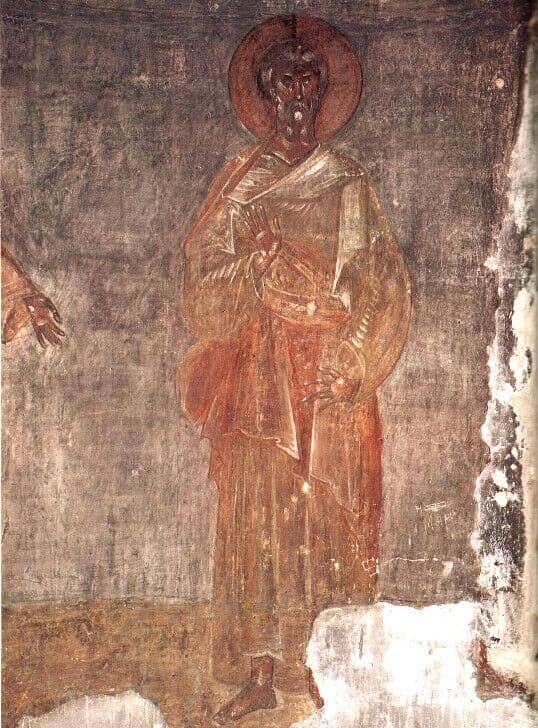
Enoch’s decision to walk with God in a world that Genesis describes as increasingly corrupt is telling. This choice, detailed in Genesis 5:22, reveals his commitment to a life of righteousness, contrasting sharply with his contemporary Lamech, who is known for his violent boasts in Genesis 4:23-24. Lamech’s path is one of aggression and self-reliance, whereas Enoch’s is one of humility and divine dependence. Moreover, Enoch's role as a prophet is exemplified in Jude 14-15, where he boldly warns of impending judgment. This prophetic action required courage and a steadfast dedication to conveying truth, even when it was likely unpopular. Enoch’s choices highlight a commitment to divine principles over societal norms, drawing a vivid picture of a man whose life choices were rooted in faith and prophetic vision.

In popular readings, Enoch is often cloaked in mystique, depicted merely as a figure who vanished into spiritual realms. This portrayal, however, overlooks the active righteousness and prophetic engagement that the texts emphasize. Enoch is not simply a mystical figure removed from human concerns; he is an exemplar of faithfulness and courage in a morally decaying world. The text presents a man whose intimacy with God is neither passive nor esoteric but is expressed through tangible decisions and actions. His story is not just about an enigmatic disappearance, but about a life that actively engaged with divine will and prophetic truth. His narrative, when stripped of its complexities, loses the depth of a life committed to walking with God in a context that demanded both faith and fortitude.

The Significance of Enoch

Enoch's translation without experiencing death suggests a unique divine favor and a foreshadowing of eternal life for the righteous. Genesis 5:24 states, "Enoch walked with God, and he was not, for God took him." This enigmatic verse captures the essence of Enoch's life and his relationship with the divine. The Hebrew term הִתְהַלֵּךְ (hithalekh), meaning "walked with God," signifies a life of close fellowship and obedience. Enoch's narrative argues that such a profound connection with God can result in divine approval so intense that it transcends the ordinary boundaries of human life, culminating in his direct translation to heaven.

The story of Enoch touches on several rich theological themes. Righteousness is a central theme, as Enoch's close walk with God implies a life lived in strict accordance with divine will. This is supported by the depiction of Enoch in Hebrews 11:5, which notes that he was taken up by faith so that he should not see death. In addition, prophecy plays a significant role in Enoch's narrative. The Book of Jude attributes to him a prophecy concerning the Lord's coming judgment: "Behold, the Lord comes with ten thousands of his holy ones" (Jude 14-15). This positions Enoch as a voice of divine revelation, foretelling future events. Furthermore, Enoch's translation is typologically linked to Christ's ascension, as both figures are taken up to heaven, symbolizing divine approval and the hope of eternal life.

Enoch's inclusion in the genealogy of Christ, as noted in Luke 3:37, underscores the continuity of God's plan from creation through to the Messiah. Enoch's presence in this lineage highlights the role of faith and righteousness, connecting the antediluvian world with the advent of Jesus. This genealogical link places Enoch at a unique intersection of the Biblical narrative, bridging the primordial past with the messianic future. Enoch's life, as recorded in the scriptures, remains distinct for its brevity and mystery, leaving a lasting impression through the sparse yet profound textual details such as the brief but potent phrase "and he was not, for God took him."

The Legacy of Enoch

In Jewish tradition, Enoch occupies a unique space as a figure shrouded in mystical and esoteric knowledge. While the canonical Hebrew Bible offers a brief account of Enoch, describing him as one who "walked with God" (Genesis 5:24), other Jewish texts delve deeper into his enigmatic character. The Book of Jubilees and 3 Enoch portray Enoch as being transformed into the angel Metatron, suggesting a divine elevation that transcends human mortality. This transformation is not merely a narrative embellishment but reflects broader themes in Jewish mysticism concerning the ascent to divine knowledge. The Talmud, in Sanhedrin 38b, touches upon Enoch's righteousness and his unique relationship with God, though he does not play a major role in Jewish liturgical practice. Instead, Enoch is referenced in discussions of righteousness and the possibility of divine ascent, symbolizing an ideal of piety that is both ancient and enduring.

Christian interpretations of Enoch have varied significantly across different eras. Early Christian writers like Tertullian and Origen viewed Enoch as a forerunner to the ascension of Christ, highlighting his role as a prophet and a paragon of righteousness. In the New Testament, Enoch is mentioned in Hebrews 11:5, which emphasizes his faith and his mysterious translation without death. During the Reformation, figures such as John Calvin approached Enoch with caution, downplaying the apocryphal Book of Enoch and focusing instead on the canonical portrayal of his faith. Theologically, Enoch is often seen as a typological precursor to the Christian belief in the rapture and resurrection, embodying the hope of salvation and eternal life. This typology has provided a rich source for theological reflection on the nature of divine favor and the ultimate destiny of the righteous.

Outside of religious contexts, Enoch's legacy permeates art and literature, where he is often depicted as a symbol of mystery and transcendence. In John Milton's "Paradise Lost," Enoch appears as a figure who embodies divine favor. Artists like William Blake have drawn inspiration from Enoch's story, capturing the enigmatic blend of mortality and immortality. In modern fantasy literature, Enoch's narrative continues to fascinate, influencing themes of immortality and divine interaction. The pseudepigraphal Book of Enoch has also found resonance in various esoteric and mystical traditions, illustrating the enduring allure of this antediluvian patriarch. In contemporary secular contexts, Enoch's story touches on the universal human desire for transcendence and immortality, reflecting a deep-seated fascination with the possibility of escaping the confines of earthly existence. His narrative, with its blend of mystery and divine encounter, continues to captivate audiences seeking to understand the boundaries of human life and the potential for divine intervention.