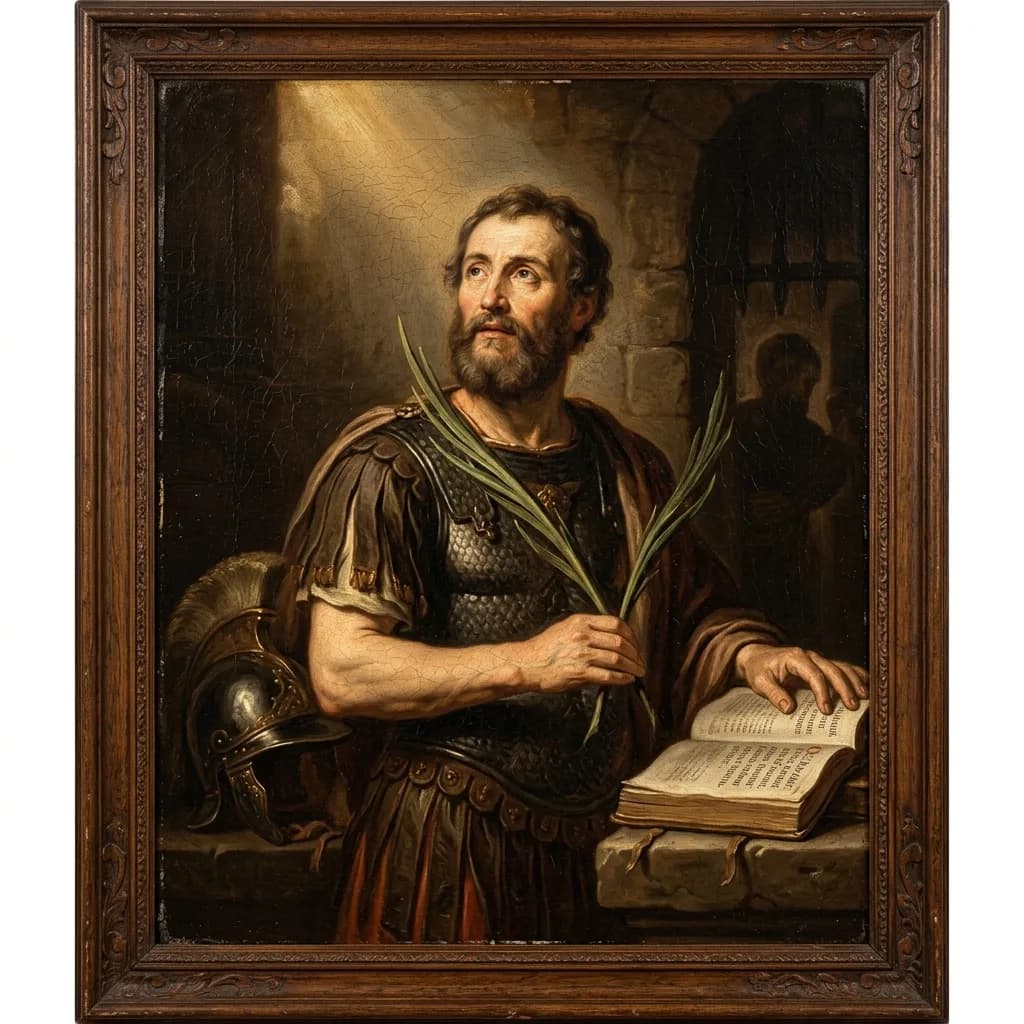
Basilides
hereticEarly Church (2nd-3rd C) · c. 85-145 CE · Updated April 9, 2026
Biography
Basilides was a Gnostic teacher in Alexandria during the early 2nd century, known for his elaborate cosmology and teachings on salvation through secret knowledge. He operated in a vibrant intellectual environment, where early Christianity mingled with a variety of philosophical and religious traditions. Alexandria, a major center of early Christian thought, provided fertile ground for his ideas. Basilides claimed to transmit secret teachings from the apostle Matthias, focusing on a universe composed of 365 heavens.
During his life, Basilides crafted a complex theological system. His teachings emphasized that the material world was a prison created by an inferior god, the Demiurge. This belief set him apart from orthodox Christian views. He also taught docetism, the idea that Christ only appeared to suffer, which challenged the emerging orthodox understanding of Jesus’ nature. His ideas drew significant attention and criticism from early Christian figures like Justin Martyr, Irenaeus, and Clement of Alexandria, who condemned his teachings as heretical.
Basilides thrived in a period when early Christianity was still defining its core doctrines. Theological debates were rampant as the Church sought to establish orthodoxy, and Alexandria became a hub for these exchanges. The question of the nature of Christ and the material world sparked intense discussions, allowing figures like Basilides to propose alternative cosmologies and ideas of salvation. His controversial views contributed to early Christianity's shaping, prompting the Church to clarify its stance on key doctrinal issues.
Is the material world a prison created by an inferior god, and did Christ truly suffer — or did he only appear to?
The question
Basilides sincerely believed he had uncovered truths that transformed his understanding of the cosmos and the role of Christ. Encountering the teachings of Matthias, he saw a hidden layer to reality, a cosmic drama largely unknown to the faithful. For Basilides, the world was not a harmonious creation of a single benevolent God. Instead, it was the flawed handiwork of an inferior entity, blind to the existence of a higher, true God. This revelation was unavoidable for him. It was as if he had been given a secret map, showing the way out of a prison that most could not even perceive. He acted on this belief, seeing himself as a guide for others trapped in ignorance.
To embrace the idea of the material world as a prison meant accepting that the physical realm was intrinsically flawed. Basilides argued that salvation lay in escaping this world through secret knowledge. This belief shattered the traditional connection with a benevolent Creator, turning the material world into a mere obstacle. The cost was profound: it required a rejection of the goodness of creation. Believers were urged to focus on transcending the tangible world, seeking an inner enlightenment that would liberate their spirits. This worldview left no room for redemption of the physical, only escape.
In stark contrast, the belief in Christ's true suffering on the cross demanded a different view of the material world. Here, the flawed world was still part of a divine plan. Christ's real human agony was crucial for salvation, affirming the material world's place in God's Creation. The price for this belief was the messy, uncomfortable reality that Salvation involved engaging with the physical world, not fleeing it. Believers were called to see the world as redeemable, despite its imperfections, and to embrace Christ's suffering as an integral part of their own path to Salvation.
Basilides's commitment to secret teachings complicated the matter further. His view forced a dichotomy between rejecting the material world and accepting Christ's suffering. He could not fully dismiss the world as wicked nor entirely embrace the traditional path of redemption through Christ. For ordinary people, this controversy wasn't just theological abstraction. It was about where they placed their hope — either in escaping the world or in finding redemption within it. This decision affected every aspect of their lives, from their prayers to their understanding of suffering and Salvation. The stakes were real, touching the core of what it meant to live and believe.
The teaching
Basilides taught that the material world is a prison created by an inferior god, known as the Demiurge. He argued that this world traps the spirit, which longs for liberation. According to Basilides, Christ's suffering on the cross was not real but an illusion. True salvation, he claimed, does not come from physical events but through secret knowledge, or gnosis, that reveals spiritual truths hidden from ordinary understanding.
Basilides developed his ideas by observing the flaws and suffering inherent in the material world. He concluded that a supreme God could not have created such imperfection. Instead, a lesser deity was responsible. In his treatise "Expositions of the Prophet Barcabbas," Basilides elaborated on this cosmology, describing how the Demiurge's creation is flawed. He interpreted biblical passages to support his views, such as John 8:32, which he believed spoke of the liberating power of hidden knowledge. He also saw 1 Corinthians 2:7 and Colossians 1:26 as evidence that divine wisdom is secret and meant for a select few.
Basilides's teachings attracted those who felt disillusioned with the material world and sought a more mystical form of salvation. His emphasis on secret knowledge appealed to individuals craving a personal spiritual journey. While his teachings did not become mainstream, they found a following in certain Gnostic circles during the early centuries of Christianity. By focusing on inner enlightenment rather than external rituals, his ideas left a lasting mark on those seeking deeper religious experiences.
The counterargument
The decisive blow against Basilides came from Irenaeus, the Bishop of Lyons, in his work "Against Heresies." Basilides claimed that an inferior deity, the Demiurge, created the flawed material world, distancing the true God from its imperfections. Irenaeus countered this by asserting that the material world, despite its flaws, was created by the one true God. He argued that the incarnation and real suffering of Christ were essential for humanity's redemption. This directly opposed Basilides's view that Christ only seemed to suffer. Irenaeus saw the physical reality of Christ's life and death as pivotal, cementing the belief in a God who fully engaged with the material world rather than shunning it.
Basilides relied on specific biblical texts to support his claims, but orthodox thinkers dismantled these interpretations. He read John 1:14 as metaphorical, implying Christ only appeared to take on flesh. The orthodox response insisted that the Word truly became flesh, experiencing real human suffering. In Colossians 1:16, Basilides saw a hierarchy of spiritual beings, with the Demiurge as the creator of the material world. Orthodox theology refuted this by affirming that all creation, visible and invisible, came from the one true God through Christ. Basilides viewed 1 Corinthians 15:50 as denying the physical reality of Christ's incarnation, while orthodox thought explained it as a transformation in resurrection, not a denial of the physical. Basilides's system also trapped itself in contradiction. It suggested that salvation came through secret knowledge, yet this undermined the necessity of Christ's real incarnation and suffering, which orthodox belief held as central.
Countering Basilides's views required a deeper understanding of the relationship between the material and spiritual realms. While Irenaeus's arguments strengthened the orthodox position, they opened questions about the nature of evil and suffering in a world created by a good God. This challenge demanded ongoing theological reflection, as believers grappled with reconciling a good creation with the presence of evil. The debate with Basilides pushed early Christians to articulate a faith that embraced both the spiritual and the material, a task that shaped Christian doctrine for centuries.
The resolution
In the 2nd century CE, a theological storm brewed in Alexandria and Rome without any formal council to address it. Influential figures like Justin Martyr, Irenaeus, and Clement of Alexandria gathered informally to tackle the Gnostic teachings of Basilides. He proposed a cosmos with 365 heavens and claimed that an inferior god, the Demiurge, created the material world. He also argued that Christ only appeared to suffer, a view known as docetism. This debate held immense stakes beyond theology, challenging the core beliefs of Christianity. While secular powers like the Roman Empire did not directly engage in this debate, their support for orthodox Christianity applied pressure on heretical movements to remain on the fringes.
The arguments centered on the nature of Christ and the material world. Basilides' followers saw the physical realm as corrupted, shaped by a lesser deity. They claimed Christ's suffering was an illusion. In contrast, Irenaeus and Clement defended the orthodox view that the world was God's creation and that Christ genuinely suffered and died. For them, the true incarnation and suffering of Christ were vital for salvation. Their insistence on Christ's real humanity and divine nature negated Basilides' complex cosmology. The condemnation of Basilidean Gnosticism solidified the rejection of docetism and affirmed the orthodox understanding of Christ's incarnation.
Despite this resolution, Gnostic beliefs did not vanish. New variations emerged, like Valentinianism and Manichaeism, which continued to promote dualistic and docetic ideas. These beliefs thrived in pockets across the Roman Empire, challenging orthodox Christianity well into the 4th century. The absence of a formal council meant these movements adapted and persisted. Even as the church grew more organized, the debates sparked by Basilides echoed through centuries. It wasn't until later councils, like those of Nicaea and Chalcedon, that the church more effectively quelled these heretical currents, though echoes of Gnostic thought reverberate even today in various spiritual movements.
Legacy
After early Church Fathers like Justin Martyr, Irenaeus, and Clement of Alexandria condemned Basilides, his teachings faced suppression within mainstream Christianity. There's scant information about Basilides's personal end, but his ideas were labeled heretical. This led to their exclusion from the growing body of orthodox Christian doctrine. The rejection was so thorough that his name almost vanished from official records, leaving behind only the criticisms of his detractors.
Despite these condemnations, Basilidean Gnosticism did not disappear entirely. It found a foothold among various Gnostic sects, particularly in Egypt and across the Mediterranean. Groups like the Valentinians and the Sethians absorbed elements of his philosophy, integrating them into their own belief systems. These communities valued the esoteric insights that Basilides offered, helping to keep his ideas alive in the margins of early Christian thought. His teachings contributed to a rich tapestry of beliefs that challenged orthodox views and further diversified early Christian heterodoxy.
Today, traces of Basilides's thought appear in New Age and esoteric spiritual movements. The notion of the material world as flawed resonates with those who seek spiritual truths beyond traditional religious institutions. Modern systems that emphasize personal enlightenment and secret knowledge echo Basilidean concepts. A concrete example is the popularity of texts and teachings that promise hidden wisdom, reflecting a continued fascination with salvation through insight — a legacy that owes something to the early seeds planted by Basilides and his followers.
Continue reading with a Scholar plan
Upgrade to ScholarCommon questions
- Why was Basilidean Gnosticism considered dangerous?
- Basilidean Gnosticism was considered dangerous because it challenged the core tenets of orthodox Christianity, such as the nature of Christ and salvation. By teaching that Christ only appeared to suffer and that salvation came through secret knowledge, it undermined the authority of the Church and its teachings on redemption and the incarnation.
- What exactly did Basilides teach?
- Basilides taught an elaborate cosmology involving 365 heavens, each ruled by an angelic power, with the material world governed by a lesser god called the Demiurge. He claimed that Christ did not suffer physically but only appeared to do so, and that salvation was achieved through acquiring secret knowledge, or gnosis, revealed to a select few.
- Why did Basilidean Gnosticism spread so widely?
- Basilidean Gnosticism spread widely due to its appeal to those seeking a deeper, mystical understanding of the divine, beyond the literal interpretations offered by orthodox Christianity. Its promise of secret knowledge and spiritual enlightenment attracted followers in the diverse and intellectually vibrant city of Alexandria.
- Who opposed Basilides, and what was their argument?
- Basilides was opposed by early Church Fathers such as Justin Martyr, Irenaeus, and Clement of Alexandria. They argued that his teachings distorted the true nature of Christ and salvation, leading believers away from the core doctrines of Christianity and undermining the authority of the Church.
- Was Basilides excommunicated, exiled, or executed?
- There is no historical record of Basilides being excommunicated, exiled, or executed. His teachings were condemned by early Church Fathers, but there is no evidence of formal ecclesiastical or civil punishment against him personally.
- Which council condemned Basilidean Gnosticism, and what did it decide?
- Basilidean Gnosticism was not condemned by a specific council. Instead, it was criticized and rejected by early Church Fathers like Justin Martyr, Irenaeus, and Clement of Alexandria, who wrote against it in their works.
- Did Basilides ever recant?
- There is no historical evidence to suggest that Basilides ever recanted his teachings. His doctrines continued to be propagated by his followers even after his death.
- What is the difference between Basilidean Gnosticism and orthodox Christianity?
- The main difference lies in the understanding of Christ and salvation. Basilidean Gnosticism teaches that Christ only appeared to suffer and that salvation comes through secret knowledge, while orthodox Christianity holds that Christ truly suffered and died for humanity's sins, offering salvation through faith and grace.
- Are there modern versions of Basilidean Gnosticism?
- While there are no direct modern versions of Basilidean Gnosticism, some contemporary spiritual movements and esoteric traditions draw on Gnostic themes, emphasizing personal enlightenment and mystical knowledge.
- Is there anything Basilides got right?
- Basilides' emphasis on the spiritual and mystical aspects of faith resonates with those seeking a deeper, personal connection with the divine. His critique of literalism in religious texts encourages a more nuanced and symbolic interpretation of spiritual teachings.
- Why does Basilidean Gnosticism still matter today?
- Basilidean Gnosticism matters today as it highlights the diversity of early Christian thought and the ongoing tension between institutional authority and personal spiritual experience. It serves as a historical example of how religious ideas can evolve and adapt to cultural contexts.
- Why did Basilides sincerely believe his position was correct? What was he actually defending — and why did he see the alternatives as worse?
- Basilides likely believed his position was correct because it offered a more profound and esoteric understanding of the divine, which he saw as more authentic than the literal interpretations of orthodox Christianity. He was defending a vision of salvation that emphasized personal enlightenment and spiritual knowledge, viewing the alternatives as overly simplistic and insufficient for true spiritual fulfillment.