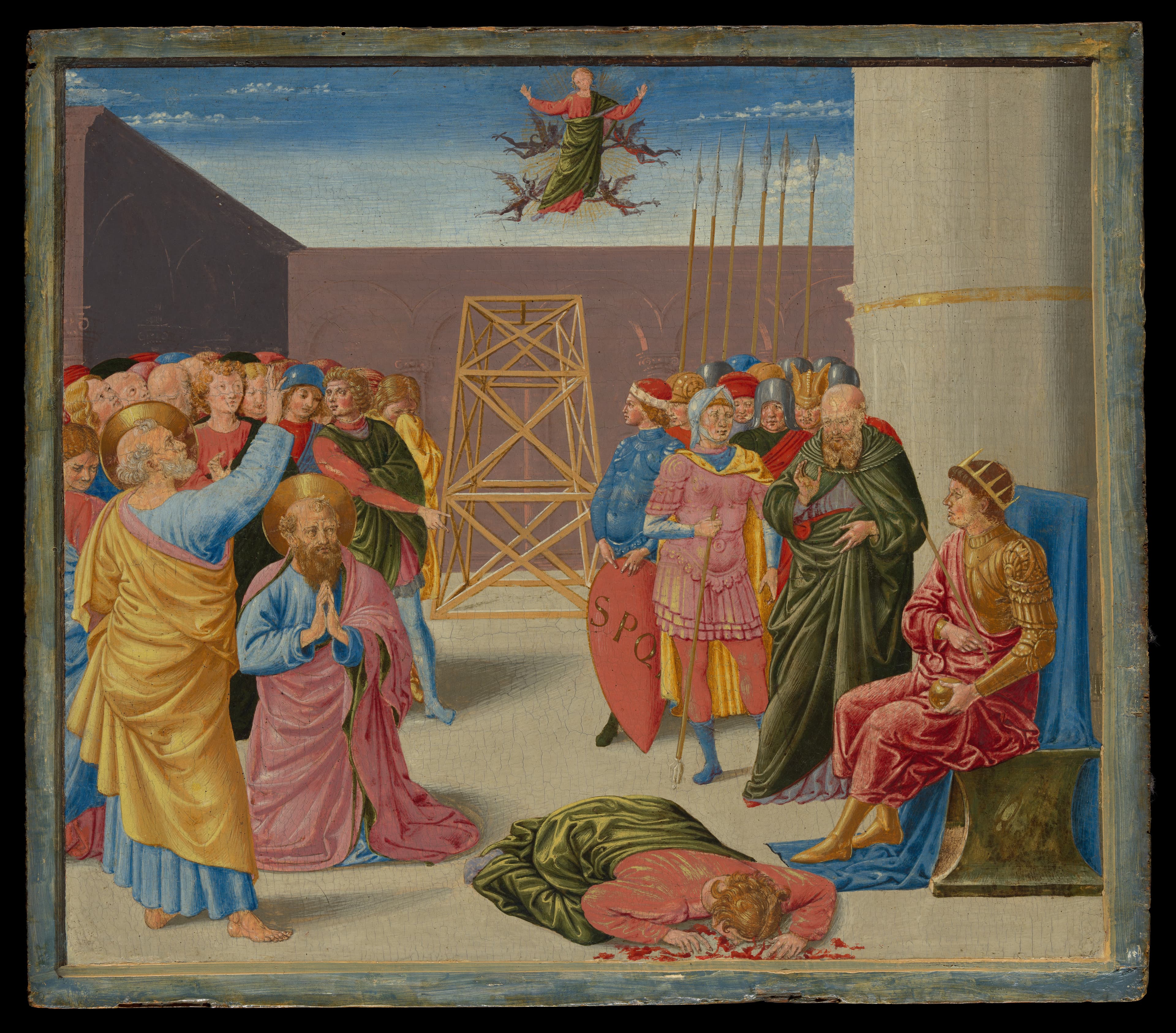
Simon Magus
hereticApostolic (1st C) · fl. c. 40-70 CE · Updated April 9, 2026
Biography
Simon Magus was a Samaritan magician and religious teacher active around 40-70 CE, known for his role in the Apostolic era as a figure condemned by early Christian leaders for his heretical teachings. He claimed to possess divine powers and even proclaimed himself as "the Great Power of God." His influence extended beyond magic; he founded a Gnostic system known as Simonianism, which involved a fallen divine female principle named Ennoia or Helena. Simon's teachings and purported miracles attracted followers, but his attempts to merge his beliefs with Christianity drew intense criticism.
In Acts 8 of the New Testament, Simon's story unfolds in Samaria, where he encountered the apostles Peter and John. Fascinated by their ability to bestow the Holy Spirit, Simon offered them money to acquire this power. This act of trying to purchase spiritual authority gave rise to the term "simony," a crime in church law. The apostles rebuked him, emphasizing the incompatibility of his views with Christian teachings. Despite his condemnation, Simon continued to preach his doctrines. He traveled with his companion Helena, whom he claimed to be the first thought of God, through the Roman Empire, spreading his beliefs and challenging the early church's authority.
Simon Magus lived during a time when early Christianity was still defining its doctrines and boundaries. The nascent Christian community struggled to establish orthodoxy amidst various interpretations of Jesus' teachings. Figures like Simon, who claimed divine status and attempted to buy spiritual power, posed real challenges. His actions underscored the tension between traditional Jewish beliefs, emerging Christian doctrine, and the influence of Gnostic ideas. Despite the lack of a formal council to address his teachings, church fathers like Justin Martyr labeled him the father of all heresies, solidifying his place as a controversial figure in Christian history.
Can spiritual power be purchased, inherited, or coerced — and what happens when a religious leader claims divine status for himself?
The question
Simon Magus watched the apostles perform miracles and offer the Holy Spirit through the laying on of hands and felt an undeniable pull. The power they wielded seemed tangible, something he could see and touch. It was not an abstract concept but a force that changed lives. In his mind, this power was akin to a treasure, something valuable that could — and should — be acquired. His upbringing and understanding of the world taught him that valuable things had a price. If the apostles could bestow such power, then surely it was something that could be bought, just like any other prized possession. This belief drove him to offer money for the ability to lay hands on others and give them the Holy Spirit. He acted with the conviction that spiritual power could be acquired through human means, much like any other commodity.
If spiritual power were something that could be bought, sold, or inherited, it would transform religious leadership into a marketplace. Authority and influence would belong to the wealthy and powerful. Faith would become transactional, losing its essence as a divine connection. The act of purchasing spiritual power would corrupt not only the individual seeking it but also the community that allowed it. Faith would be devalued, reduced to a series of transactions rather than a genuine relationship with the divine. The authenticity of spiritual experiences would wither, leaving behind a hollow shell of what once was a vibrant faith.
On the other hand, if spiritual power is a divine gift beyond human control, then it demands a different approach. Authority is not something one can claim but must be granted by divine will. This perspective requires humility, the relinquishment of personal ambition, and the acceptance that true power lies with the divine, not with human beings. It costs the individual their own desire for control and status. By accepting that spiritual power cannot be coerced or acquired by human means, the sanctity of spiritual leadership is preserved. Religious experience remains authentic, untouched by the corrupting influence of wealth and ambition.
The tension between these perspectives creates a trap. Simon Magus's personal ambition and desire for divine status clash with the humility required for genuine spiritual leadership. This conflict cannot be easily resolved because it touches on fundamental human desires and the nature of divine authority. For ordinary believers, the stakes were high. They looked to their leaders for guidance and authenticity. The idea that spiritual power could be bought undermined their trust in religious leaders and distorted their understanding of divine grace. It raised questions about what it meant to truly experience the divine. The controversy over whether spiritual power was a commodity or a gift touched the core of their faith and the integrity of their community.
The teaching
Simon Magus taught that spiritual power could be acquired through means other than divine grace. He claimed that such power could be bought, inherited, or even self-declared. Simon went so far as to proclaim himself as the supreme divine power, capable of bestowing spiritual authority on others. His teachings suggested a radical departure from the idea that spiritual gifts were solely the result of divine will or intervention. Instead, Simon offered a vision where spiritual power was accessible to anyone willing to make the right investment or claim.
The logic behind Simon Magus's teachings stemmed from his belief in personal enlightenment and acquisition. In the New Testament, specifically in Acts 8:18-19, Simon's attempt to buy the ability to bestow the Holy Spirit revealed his misunderstanding of divine gifts. Similarly, Acts 8:9-10 describes how he practiced sorcery and amazed the people of Samaria, leading them to call him "the Great Power of God." This reinforced his belief that spiritual authority could be claimed and wielded by individuals like himself. The Acts of Peter, a treatise from the late 2nd century, depicts Simon as a rival to the apostles, seeking to prove his superiority through magical feats, further illustrating his conviction that power could be demonstrated and transferred outside of traditional divine channels.
Simon Magus's teachings found an audience among those intrigued by his magical feats and those eager for a direct experience of spiritual power. People who were dissatisfied with the mediation of established religious authorities were drawn to his promise of immediate access to the divine. His message spread among communities curious about alternative spiritual practices and hungry for a sense of control over their spiritual destinies. Though his following did not eclipse the early Christian movement, Simon's influence persisted in various forms, leaving a mark on early Christian writings and later Gnostic traditions. In Samaria, Simon remained a figure of fascination, illustrating the enduring allure of his claims to divine power.
The counterargument
The decisive argument against Simon Magus rested on the belief that spiritual power and authority are gifts from God, not commodities to be bought or sold. This principle argued that divine grace, freely given by God, cannot be manipulated or obtained through human means. Simon Magus's attempt to purchase apostolic authority and claim divine status directly violated this tenet. Justin Martyr, an early Christian apologist, was a key figure in articulating this stance. In his 'First Apology', written around 155 CE, Justin contended that Simon's actions distorted Christian doctrine. He emphasized that true divine power is shown through humility and service, not through self-aggrandizement or financial transactions.
Simon Magus relied on specific scriptural passages to justify his claims, but each was met with a clear orthodox rebuttal. In Acts 8:10, he interpreted the people's acknowledgment of him as "the Great Power of God" as validation of his divine status. Orthodox teaching countered that this acknowledgment stemmed from deception, as genuine divine power was evident in the apostles' works and teachings, not in magical feats. When Simon tried to buy the ability to bestow the Holy Spirit, as recounted in Acts 8:18-19, Peter's response in Acts 8:20 underscored that God's gift cannot be purchased with money. In John 14:12, Simon claimed his miraculous works fulfilled Jesus' promise that his followers would do greater works. The orthodox interpretation clarified that "greater works" referred to spiritual fruits and the Gospel's spread, not magical displays. Simon's self-serving claim to be the 'Great Power of God' contradicted Christian ideals of humility and service, undermining his credibility.
The orthodox counter-argument demanded a clear distinction between true and false spiritual authority, requiring the church to remain vigilant against similar heresies. This vigilance posed the ongoing challenge of defining and recognizing legitimate spiritual gifts and authority within the church. Such efforts were necessary to maintain doctrinal purity and prevent the spread of false teachings. The struggle to delineate genuine spiritual gifts continues to shape church dynamics, necessitating careful discernment and guidance.
The resolution
In the mid-first century, the apostles Peter and John faced a theological challenge in Samaria involving Simon Magus, a local figure who attempted to buy the power of the Holy Spirit. This gathering wasn't a formal council but a decisive confrontation led by apostolic authority. The apostles were there to address a critical question: could spiritual power be purchased or coerced? The Roman Empire, which tolerated various religious practices, provided a backdrop that allowed Simon to spread his teachings without immediate political suppression. Yet, the core issue was theological, centered on the sanctity of spiritual authority.
The apostles argued fiercely against the commodification of spiritual gifts. Simon's offer to buy divine power was met with a staunch rebuke from Peter, who declared that God's gifts were not for sale. This confrontation gave rise to the term "simony," highlighting the severity of the offense. The apostles emphasized that spiritual authority came solely from divine grace, not human negotiation or wealth. Their condemnation of Simon Magus established a precedent that spiritual gifts were pure and unmerited, a principle that would shape the church's stance on ecclesiastical integrity.
Despite this resolution, the controversy did not vanish. Simon Magus's influence lingered, as evidenced by the later writings of early Christian figures like Justin Martyr and Irenaeus, who continued to combat Simonian ideas. These Gnostic teachings persisted, evolving and challenging the church's orthodoxy. The broader question of heretical teachings remained unresolved, prompting further councils and debates. It wasn't until much later, as the church solidified its doctrines and expanded its reach, that the influence of Simonianism and similar movements gradually waned, leaving a lasting impact on the church's approach to heresy.
Legacy
After his condemnation in Acts 8, Simon Magus did not fade quietly into history. Instead, he reportedly traveled to Rome, where he gathered a following and continued to preach his own brand of religious belief. Despite initial success, the early Christian community ultimately rejected him. Various apocryphal stories tell of his demise, often attributing his death to a failed attempt to demonstrate his supposed divine powers. Some accounts suggest he attempted to fly and fell to his death, a dramatic end befitting someone accused of hubris and false teachings.
Despite Simon's fall, his ideas lived on, influencing the development of Gnostic sects. These groups, particularly active in Syria and Rome, revered Simon as a divine figure, sometimes even considering him an incarnation of God. His teachings, which included a blend of dualistic cosmology and the notion of a fallen divine principle, resonated with later Gnostic movements. These sects often viewed the material world as a flawed creation, echoing Simon's belief in a cosmic struggle between good and evil forces.
Today, the legacy of Simon Magus echoes through certain New Age beliefs that emphasize personal divinity and the pursuit of spiritual enlightenment. His influence extends into language with the term 'simony', which refers to the buying or selling of church offices and remains a cautionary example of the dangers of commercializing spiritual authority. This concept serves as a reminder of the enduring tension between genuine faith and the temptation to exploit it for personal gain.
Continue reading with a Scholar plan
Upgrade to ScholarCommon questions
- Why was Simonianism considered dangerous?
- Simonianism was considered dangerous because it challenged the authority of the early Christian church by promoting a rival religious system. It claimed that Simon Magus himself was a divine power, undermining the unique divinity of Jesus Christ. Additionally, it introduced Gnostic ideas that were seen as corrupting Christian teachings.
- What exactly did Simon Magus teach?
- Simon Magus taught that he was the supreme divine power, referred to as 'the Great Power of God.' He introduced a Gnostic system that included a fallen divine female principle, Ennoia or Helena, who was trapped in the material world. His teachings suggested that spiritual enlightenment could be achieved through secret knowledge rather than faith in Christ.
- Why did Simonianism spread so widely?
- Simonianism spread widely due to its appeal to those seeking mystical and esoteric knowledge, which was a common interest in the Hellenistic world. Simon's charismatic personality and claims of divine power attracted followers. Additionally, the early Christian church was still forming its doctrines, allowing alternative teachings to gain traction.
- Who opposed Simon Magus, and what was their argument?
- Simon Magus was opposed by early Christian leaders such as the apostles Peter and Paul, as well as church fathers like Justin Martyr. Their argument was that Simon's teachings were heretical, as they contradicted the core Christian belief in the unique divinity of Jesus and the authority of the apostles. They also condemned his attempt to buy spiritual power, as recorded in Acts 8.
- Was Simon Magus excommunicated, exiled, or executed?
- There is no historical record of Simon Magus being formally excommunicated, exiled, or executed. The Acts of the Apostles describe his rebuke by Peter, but his ultimate fate remains uncertain and is not documented in early Christian writings.
- Which council condemned Simonianism, and what did it decide?
- No specific council formally condemned Simonianism. However, it was denounced in the Acts of the Apostles and by early church fathers like Justin Martyr and Irenaeus. These figures consistently rejected Simon's teachings as heretical and contrary to Christian doctrine.
- Did Simon Magus ever recant?
- There is no historical evidence that Simon Magus ever recanted his teachings. The Acts of the Apostles describe him asking for prayers after being rebuked by Peter, but this does not constitute a formal recantation of his beliefs.
- What is the difference between Simonianism and orthodox Christianity?
- Simonianism differs from orthodox Christianity in its view of divine power and salvation. Simonianism claims that Simon Magus himself was a divine power and emphasizes secret knowledge for salvation. In contrast, orthodox Christianity centers on the divinity of Jesus Christ and salvation through faith in Him and His resurrection.
- Are there modern versions of Simonianism?
- There are no direct modern versions of Simonianism, but some New Age and Gnostic movements share similar themes of secret knowledge and divine self-realization. These movements often draw on Gnostic ideas that were part of Simonianism's teachings.
- Is there anything Simon Magus got right?
- Simon Magus's emphasis on the spiritual realm and the existence of divine powers reflects a genuine human interest in understanding the metaphysical. While his specific teachings were deemed heretical, they highlight the early diversity of thought in religious and philosophical exploration.
- Why does Simonianism still matter today?
- Simonianism matters today as it represents one of the earliest challenges to Christian orthodoxy, illustrating the diversity and complexity of early Christian thought. It also serves as a historical example of how religious movements can arise and challenge established beliefs, a dynamic still relevant in contemporary religious discourse.
- Why did Simon Magus sincerely believe his position was correct? What was he actually defending — and why did he see the alternatives as worse?
- Simon Magus likely believed his position was correct because he saw himself as a divine figure with a unique understanding of spiritual truths. He was defending a vision of spirituality that emphasized personal enlightenment and divine power, which he may have viewed as more empowering than the communal and faith-based approach of early Christianity. He might have seen the alternatives as limiting personal spiritual authority and knowledge.