Mary, Mother of Jesus · Updated August 15, 2026
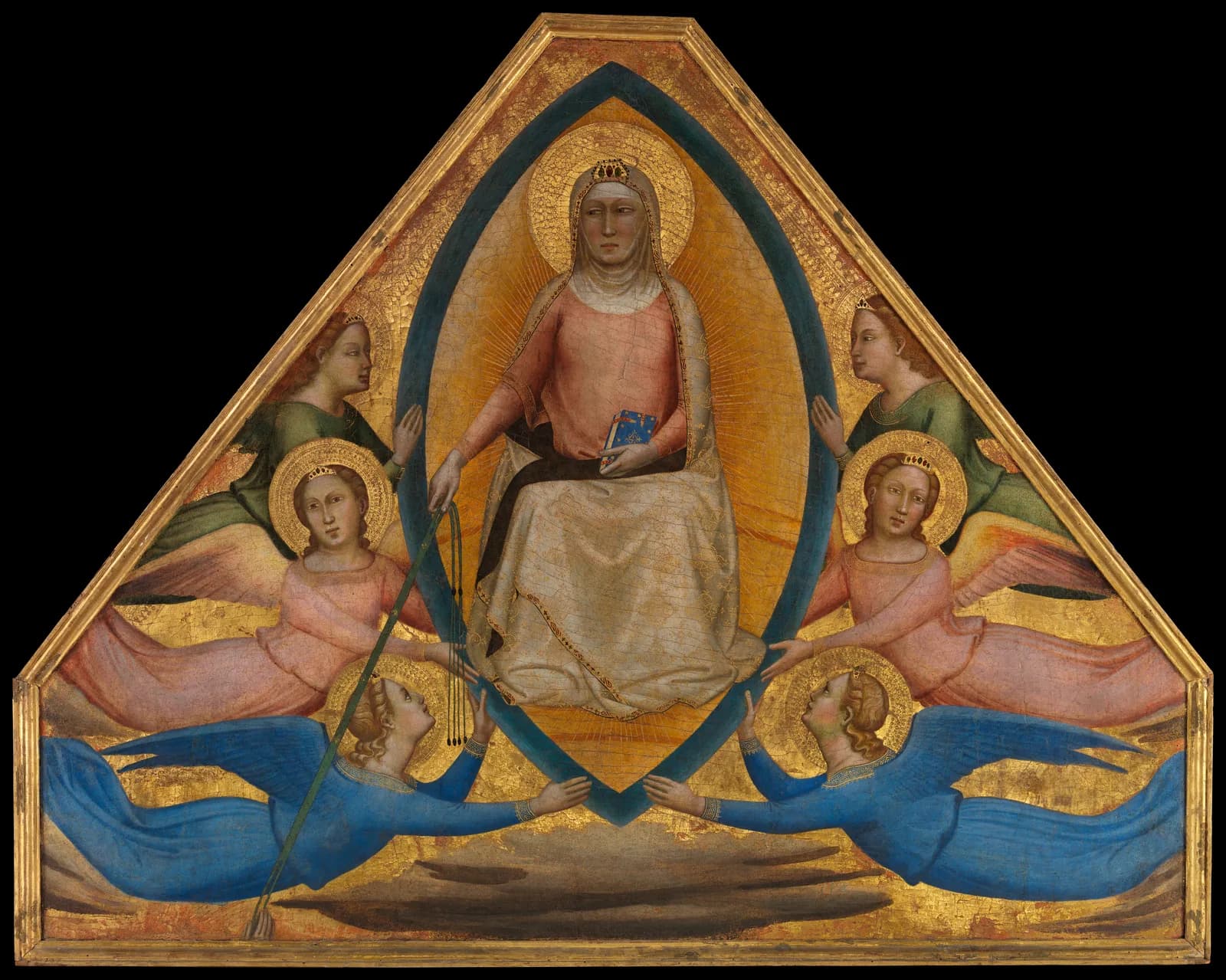
The Assumption of Mary is one of the most widely held doctrines about Mary, the mother of Jesus, in Catholic and Orthodox Christianity. It holds that at the end of her earthly life, Mary was taken body and soul into Heaven — that her physical body was not left behind as it is for ordinary mortals but was raised and glorified. The Catholic Church defined this doctrine as dogma in 1950 under Pope Pius XII, making it one of the most recently defined articles of Catholic faith. For Catholics, belief in the Assumption is mandatory. For Eastern Orthodox Christians, the equivalent doctrine — called the Dormition — holds that Mary fell into a sleep-like death before being assumed; the distinction matters doctrinally, but both traditions affirm her bodily glorification.
The doctrine's roots are ancient even if its formal definition is modern. No biblical text explicitly describes the Assumption. The earliest textual evidence comes from apocryphal writings of the fourth and fifth centuries — accounts that circulated widely but carried no canonical authority. By the sixth and seventh centuries, the feast was embedded in the liturgical calendars of both Eastern and Western churches, celebrated on August 15. Medieval theologians, including
What distinguishes the Assumption from ordinary sainthood is that it is not about Mary's soul going to heaven — all Christian traditions accept that — but about her physical body being glorified before the general resurrection. The absence of relics, of a known burial site, and of any claim by a church to possess her remains has historically been cited as indirect evidence. No Christian community has ever produced what every major saint produced: bones. The Catholic definition in 1950 deliberately left open whether Mary died before being assumed or was taken up alive, making the Assumption and the Dormition formally compatible despite their different emphases.
Mary's Assumption is held not because Scripture records it, but because her unique role in the Incarnation made bodily corruption theologically incompatible with who she was.
The Assumption poses a foundational question about the nature of doctrinal development: can the church define as binding dogma a teaching nowhere stated in Scripture and absent from the explicit theological consensus of the early church? When Pope Pius XII defined the Assumption in 1950, he acknowledged that no biblical text directly attests the doctrine. His warrant was sensus fidelium , the universal belief of the faithful , combined with the theological coherence of the teaching with what Scripture says about Christ and redemption. This move treats the church's living tradition and the convergent belief of believers across centuries as themselves constituting sources of revelation, alongside Scripture.
Protestant theologians have consistently rejected this approach. The Reformation principle of sola scriptura holds that Scripture alone is the norm of doctrine, and on that standard, the Assumption fails straightforwardly , there is no text. Catholic and Orthodox theology operates with a different epistemology: tradition and the magisterium are themselves channels through which revealed truth is known and defined. The 1950 definition is therefore not just a statement about Mary , it is a statement about how the church knows what it believes, and that question is the real theological fault line.
The Assumption also carries eschatological weight. Pius XII, writing in the shadow of Auschwitz and Hiroshima, was making an implicit claim about the body and its destiny. The Assumption asserts that one human body has already undergone what the resurrection promises for all , glorification, not dissolution. This is a theological statement about the goodness of material Creation and its redemption. For John Paul II, who developed the theology of the body extensively, the Assumption was the eschatological horizon of that entire project. The 1950 definition remains one of the formal barriers to Catholic-Protestant reunion.
Continue reading with a Scholar plan
Upgrade to Scholar