Exodus 32:1-35 · Exodus · Updated April 25, 2026
Golden Calf
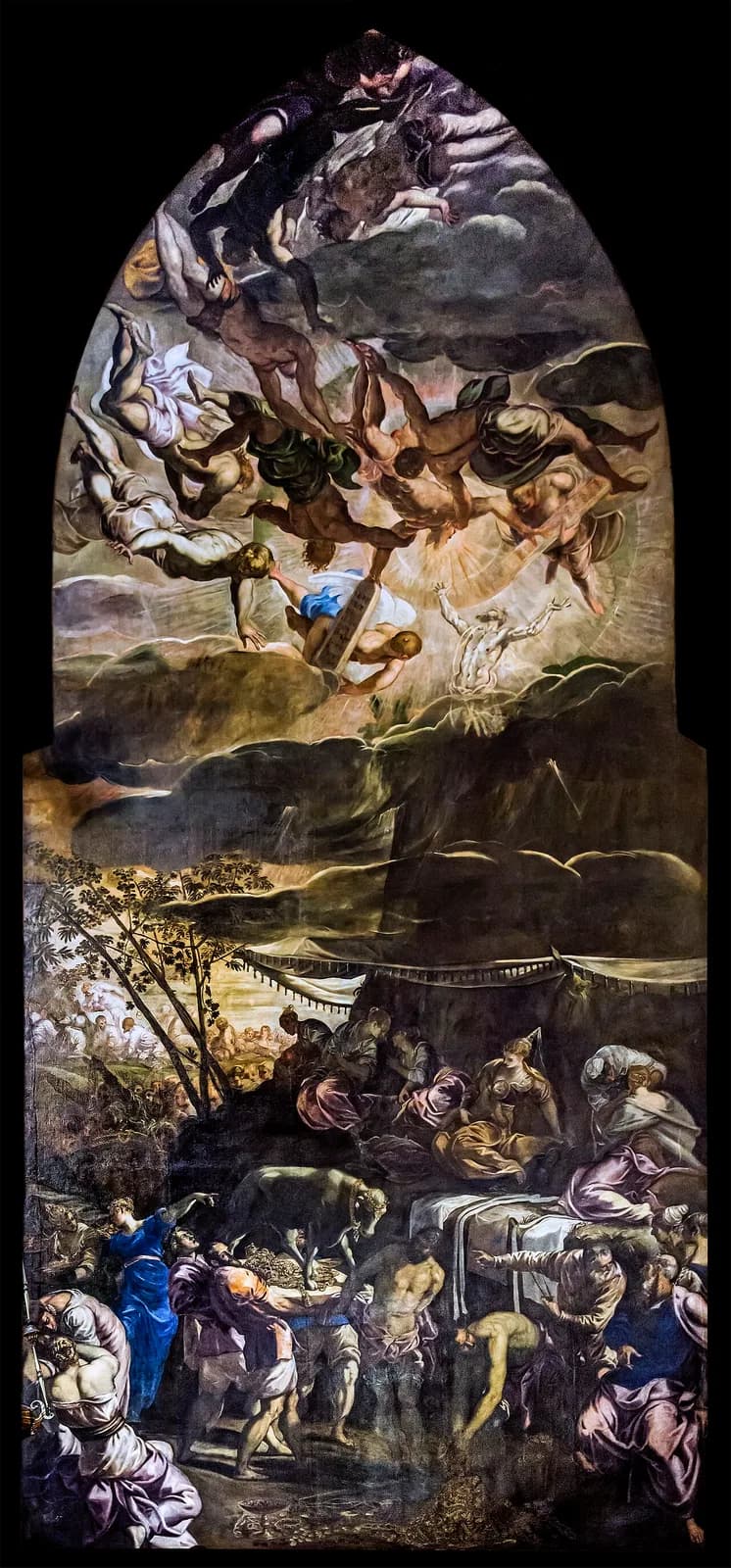
The Israelites, led by Aaron, create a golden calf to worship while Moses is on Mount Sinai. God informs Moses of their idolatry, and Moses intercedes on their behalf, but upon seeing the idol, he breaks the tablets of the law and punishes the people. The Levites execute judgment, and God sends a plague as a consequence of their sin.
Summary
Exodus 32:1-35 recounts a significant event during the Israelites' journey from Egypt, where they commit idolatry by worshiping a golden calf. The passage begins with Moses on Mount Sinai, receiving the law from God. Meanwhile, the Israelites grow impatient, fearing Moses will not return. They gather around Aaron, Moses' brother and second-in-command, and demand that he make them gods to lead them since they do not know what has happened to Moses (32:1). Aaron instructs them to collect gold earrings, which he uses to create a molten calf. The people declare this calf to be their god, attributing their escape from Egypt to it (32:4).
Upon the calf's completion, Aaron builds an altar and announces a feast to the Lord for the following day. The Israelites offer sacrifices and engage in revelry (32:5-6). Meanwhile, God informs Moses of the people's corruption, expressing His intention to destroy them and make a great nation from Moses instead (32:7-10). Moses pleads with God to spare the Israelites, reminding Him of His promises to Abraham, Isaac, and Jacob (32:11-13). God relents, and Moses descends the mountain with the stone tablets inscribed by God (32:14-15). As Moses approaches the camp, he sees the calf and the people dancing, and in his anger, he throws down and shatters the tablets (32:19). Moses destroys the calf, grinding it to powder and scattering it on water, which he makes the Israelites drink (32:20). He confronts Aaron, who blames the people's demands for the idol (32:21-24).
Moses then calls for those loyal to God to come to him, and the Levites respond. He instructs them to execute judgment on the idolaters, resulting in about three thousand deaths (32:26-28). Moses tells the people they have committed a great sin and returns to God to seek atonement for them (32:30). He asks God to forgive their sin, offering himself as a sacrifice if necessary (32:31-32). God replies that only those who have sinned will be blotted out of His book and commands Moses to lead the people forward with His angel guiding them, but warns that He will hold them accountable for their sin in the future (32:33-34). The passage concludes with God sending a plague upon the people for their sin of making the calf (32:35).
Chiastic structure
ⓘExodus 32:1-6
“And when the people saw that Moses delayed... These be thy gods, O Israel, which brought thee up out of the land of Egypt.”
Exodus 32:11-14
“And Moses besought the LORD his God, and said, LORD, why doth thy wrath wax hot against thy people...”
Exodus 32:30-35
“And Moses returned unto the LORD, and said, Oh, this people have sinned a great sin... And the LORD plagued the people, because they made the calf, which Aaron made.”
Both A and A' involve the people's sin and God's response to it, with Moses acting as an intermediary.
Interpretation and theological stakes
Continue reading with a Scholar plan
Upgrade to Scholar