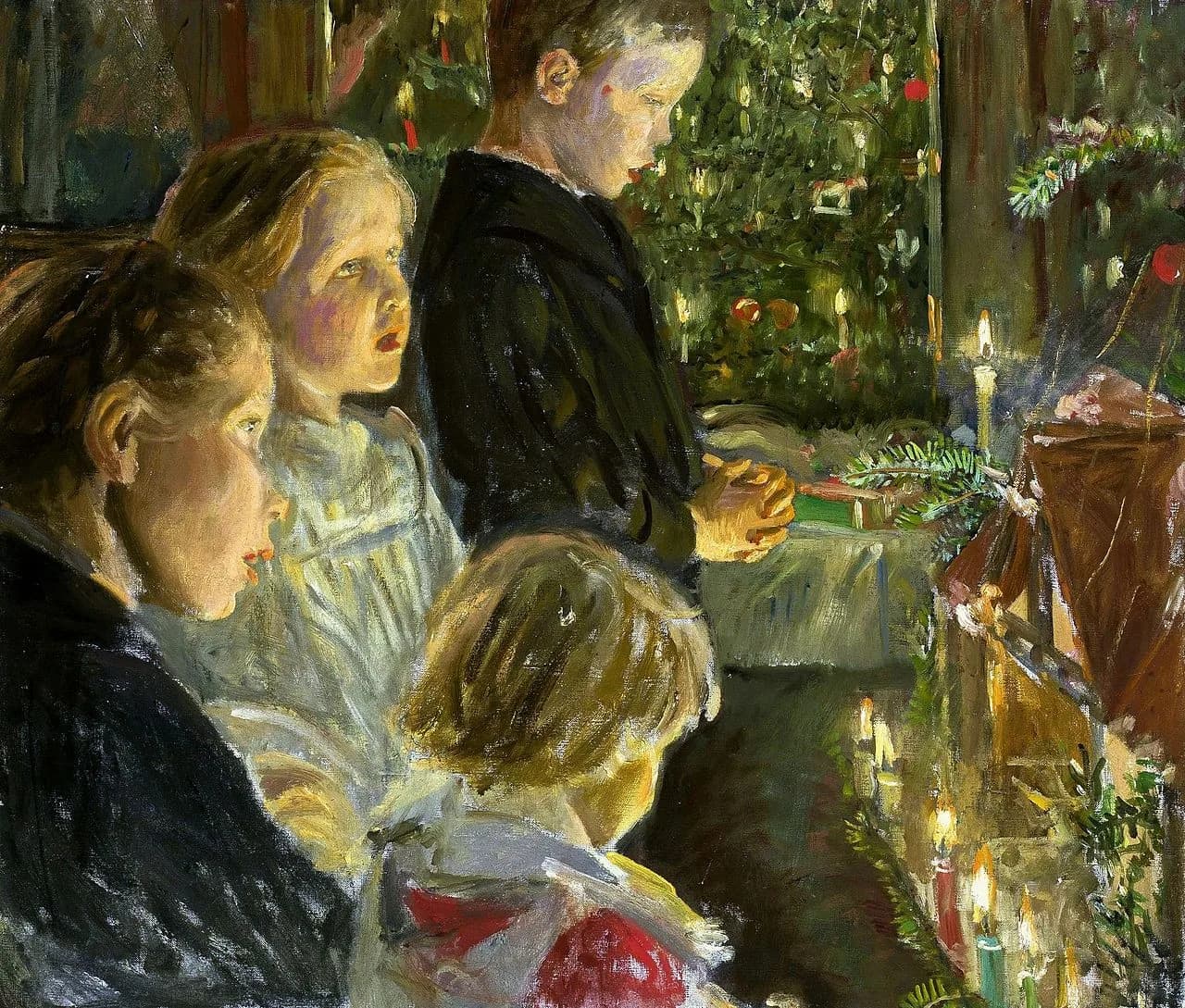
Christmas Prayers
Prayer traditions · Updated August 15, 2026
Overview
"Christmas prayers were not always a hallmark of the holiday season." This might surprise those who assume that the Yuletide tradition has always been steeped in liturgical observance. Yet, the practice of Christmas prayers developed over centuries, and their history is intertwined with the broader narrative of Christianity's growth and adaptation. The origins and evolution of these prayers reveal cultural and theological influences, with each contributing to how believers today approach the spiritual dimensions of Christmas.
The formalization of Christmas prayers can be traced back to the early centuries of Christianity. The Council of Nicaea in 325 AD, convened by Emperor Constantine, established December 25 as the official date for celebrating Christ's birth. Prior to this, various Christian communities observed the Nativity on different dates, with no uniform liturgical practices. As the December 25 celebration gained prominence, the need for structured prayers and liturgies grew. By the Middle Ages, the Roman Church had developed a range of Christmas prayers, influenced by figures like St. Ambrose and St. Augustine, who emphasized the importance of prayer in commemorating The Incarnation. This shift gave the early Church a means for Christians to collectively express theological truths about Christ's birth.
The biblical foundation for Christmas prayers primarily stems from the Nativity narratives in the Gospels of Matthew and Luke. Luke 2:14 records the angelic proclamation: "Glory to God in the highest, and on earth peace, good will toward men." This passage is often interpreted as a heavenly endorsement of peace and divine favor, forming the cornerstone for many Christmas prayers. However, the original Greek text suggests a more restricted reading, emphasizing peace only for those "on whom his favor rests." Matthew's account, in contrast, provides less direct material for prayer but introduces The Magi's gifts and the concept of homage to the newborn king. Traditions differ on how these texts should be read; the Protestant Reformation, for example, led to a more literal interpretation of scripture that sometimes differed from Catholic exegesis.
Theologically, Christmas prayers invite believers to reflect on the Incarnation, God becoming flesh in the person of Jesus Christ. For Catholics, as articulated by figures like Thomas Aquinas, the focus is on the mystery of divine humility and the salvific purpose of Christ's birth. Orthodox traditions emphasize the cosmic significance of the Incarnation as a renewal of Creation, often highlighted in the prayers of The Divine Liturgy. Protestant perspectives, influenced by reformers like Martin Luther, stress the personal relationship with Christ and the power of His coming. Each tradition, while differing in emphasis, calls the believer to a deeper understanding of God's love made manifest in the world.
A common misunderstanding is the belief that Christmas prayers are merely festive, lacking theological depth. This overlooks their rich doctrinal content and historical significance. Today, Catholic, Protestant, and Orthodox churches incorporate these prayers into Advent and Christmas Eve services, ensuring that the spiritual meaning of the season remains central. For instance, the Roman Catholic Church's Midnight Mass on December 24 is a pivotal moment where specific prayers articulate the Incarnation's mystery. As debates continue over the commercialization of Christmas, the enduring tradition of Christmas prayers echoes the holiday's spiritual core.