Library
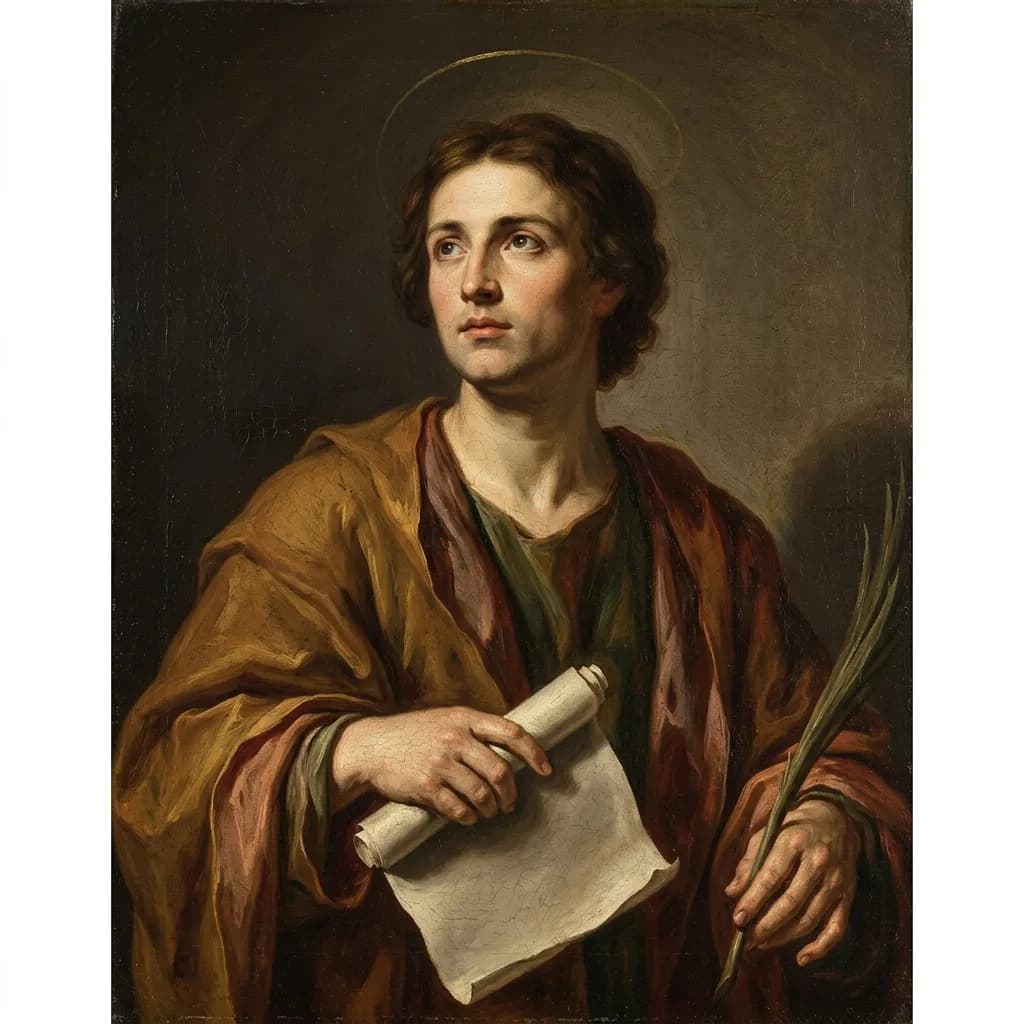
AI-generated illustration
Library
Post-Nicene Patristic (4th-5th C) · c. 380-456 CE · Updated April 9, 2026
Eutyches was an Archimandrite in Constantinople during the Post-Nicene Patristic era, known for his role in the development of Eutychianism, a form of Monophysitism. As a monastic superior in the bustling capital of the Eastern Roman Empire, Eutyches became a central figure in the theological debates of his time. He dedicated his life to opposing Nestorianism, which emphasized the separation between Christ's human and divine natures.
Born around 380 CE, Eutyches rose to prominence through his unwavering commitment to the idea that Christ's divine nature absorbed his human nature after the incarnation. This belief placed him at odds with many church leaders who sought a more balanced understanding of Christ's dual nature. His teachings gained attention and controversy, ultimately leading to his excommunication. Eutyches's views became a focal point at the Council of Chalcedon in 451 CE, where church leaders condemned his Monophysitism as heretical. Despite this, he remained steadfast in his convictions until his death in 456 CE.
The era Eutyches lived in was rife with theological disputes over Christ's nature. This period followed the Council of Nicaea, which had already set the stage for intense doctrinal debates. Theological minds grappled with how to articulate the union of Christ's divinity and humanity. Eutyches's Monophysitism emerged as a response to Nestorianism, reflecting the broader struggle for a unified Christology. The Council of Chalcedon, which addressed these disputes, marked a significant turning point in defining orthodox Christian belief, rejecting Monophysitism and affirming the dual nature of Christ.
After the incarnation, does Christ have two natures (divine and human) or one — and if only one, what happened to his humanity?
Eutyches, a devout monk, reacted to the teachings of Nestorius, who emphasized the separation of Christ's divine and human natures. Eutyches saw this as a threat to the unity of Christ and felt compelled to assert the opposite view. For him, the essence of the Incarnation lay in the unity of Christ's nature. He believed that if Christ's divinity and humanity remained separate, the Incarnation risked becoming a mere partnership of two beings rather than a true union. Eutyches argued passionately that Christ, after The Incarnation, had one nature, with His humanity absorbed into His divinity. This stance arose from his desire to preserve the integral unity of Christ.
Advocates of the two-nature position argued that Christ's divine and human natures remained distinct yet united in one person. This view aimed to honor both Christ's divinity and humanity. However, it risked splitting Christ into two separate identities, potentially undermining the unity of The Incarnation. This led to a theological tightrope, where maintaining the distinction between natures threatened to erode the seamless union that The Incarnation intended to represent. It painted a picture of a Christ who could be seen as two entities operating under a single name, challenging the coherence of a truly unified savior.
Eutyches' position, asserting that Christ had only one nature, came with its own set of costs. By claiming the human nature was absorbed into the divine, it obliterated any real distinction between Christ's humanity and divinity. This view diminished the reality of Christ's human experiences and sufferings. If His humanity was essentially lost in the divine nature, then His genuine human life became a shadow, casting doubt on His ability to fully identify with human struggles. It left believers questioning the authenticity of Christ's human journey and the implications for their own salvation.
Both sides grappled with the necessity of affirming Christ as both fully divine and fully human. Neither could abandon the mystery of the Incarnation, which held profound significance for the faithful. The nature of Christ directly impacted how ordinary people understood salvation and related to God. It influenced their prayers and liturgies, shaping their encounter with Christ as both God and man. The debate was not an abstract theological exercise; it was about ensuring that the Incarnation remained a living reality, accessible and transformative in the lives of believers.
Eutyches taught that after the incarnation, Christ possessed only one nature, which was divine. He believed that Christ's human nature was absorbed into his divine nature, much like a drop of water disappearing into the vastness of the ocean. For Eutyches, the incarnation did not result in a blending of two natures but rather the complete dominance of the divine nature over the human.
Eutyches's reasoning centered on preserving the unity of Christ's nature. He argued that recognizing two distinct natures would imply a division within Christ, threatening the belief in his singular divine identity. To support his view, Eutyches referred to scriptures such as John 1:14, Colossians 2:9, and Philippians 2:7. He interpreted these verses to mean that while the divine Word took on flesh, the divine nature remained supreme, absorbing the human nature. In his Letter to Pope Leo I in 449 CE, Eutyches defended his position, asserting that acknowledging two natures could lead to a split in Christ's personhood.
Eutyches's teaching resonated with those wary of Nestorianism, which they perceived as dividing Christ into two separate persons. His emphasis on the unity of Christ's nature appealed to those who desired to uphold the mystery of The Incarnation as a single divine act. This teaching found support particularly in Eastern monastic circles, reflecting a preference for maintaining a unified view of Christ's nature. Eutyches's ideas significantly influenced early church debates and contributed to the convening of the Council of Chalcedon in 451 CE, where his views were ultimately deemed heretical.
The decisive argument against Eutyches centers on his assertion that after the Incarnation, Christ had only one nature, a blend of divine and human. The key figure who dismantled this position was Pope Leo I, also known as Leo the Great. In his famous "Tome," a letter addressed to Flavian, the Patriarch of Constantinople, Leo argued that Eutyches's view denied the full humanity of Christ. Leo presented a logical sequence: if Christ were not fully human, he could not truly represent humanity in redemption. This would undermine the core Christian belief that Jesus's life, death, and resurrection offer salvation to humankind. Leo emphasized the need to affirm both the divine and human natures of Christ, distinct yet united in one person, to maintain the integrity of the Gospel message.
Eutyches relied on specific scripture passages, such as John 1:14, which states, "The Word became flesh," to argue that Christ’s nature changed into something singular. The orthodox response dissected these texts, pointing out that becoming flesh did not imply a fusion into a single nature. The trap in Eutyches's argument lay in his failure to provide a coherent explanation of how Christ could be both God and man if his human nature was absorbed by the divine. This internal contradiction made his position unstable. Orthodox theologians used this inconsistency to show that without two distinct natures, Christ's role as mediator between God and humanity collapsed.
The counter-argument to Eutyches required a careful articulation of how two natures could coexist in one person without confusion or division. This challenge led to the development of the Chalcedonian Definition, which clarified that Christ is "truly God and truly man" in two natures. The new problem it created involved explaining this mystery in a way that avoided sounding like two separate persons. This theological balancing act demanded significant intellectual effort but ultimately reinforced the Christian understanding of Christ's identity. The Council of Chalcedon in 451, where this definition was formalized, marked a pivotal moment in church history, drawing over 500 bishops to achieve consensus.
In 451 CE, the Council of Chalcedon convened in response to a theological storm brewing in the Christian world. Emperor Marcian, seeking to stabilize his empire, called bishops from across Christendom to Chalcedon, a city near Constantinople. The emperor understood that theological disputes over the nature of Christ threatened not only religious unity but also political stability. Representatives of the Pope and the Patriarch of Constantinople joined forces with other church leaders to address the pressing question: Did Christ possess one nature, as Eutyches claimed, or two, as argued by supporters of the Tome of Leo?
At the heart of the debate was Eutyches' assertion that Christ's human nature was absorbed into his divine nature, effectively blending them into one. His opponents argued that this undermined the full humanity of Christ. The supporters of the Tome of Leo insisted on a doctrine that upheld both divine and human natures as distinct yet united in one person. The council ultimately condemned Eutyches and Monophysitism, affirming the doctrine of Dyophysitism. The Chalcedonian Definition declared that Christ exists in two natures, fully divine and fully human, without confusion or change. This precise language aimed to encapsulate the mystery of the Incarnation while maintaining theological clarity.
Despite the council's definitive stance, the controversy did not end. The Monophysite movement persisted, particularly in regions like Egypt and Syria, where it gained substantial following. This schism gave rise to the Oriental Orthodox Churches, which rejected the council's decrees. The division marked a lasting fracture in Christianity, one that remained unresolved for centuries. The rift between Chalcedonian and non-Chalcedonian Christians continues to this day, demonstrating the enduring complexity of theological disputes and their far-reaching impacts.
Eutyches faced a harsh downfall after the Council of Chalcedon condemned his teachings in 451 CE. Once a prominent monk in Constantinople, Eutyches fell from grace, losing his ecclesiastical position and being exiled. The Church sought to distance itself from his views, which they saw as heretical. Eutyches spent his final years in obscurity, living without the chance of rehabilitation. He died around 456 CE, leaving a legacy that would outlive him, although he himself faded into the background of church history.
Despite Eutyches' personal obscurity, his teachings, known as Eutychianism or Monophysitism, continued to thrive, especially in the Eastern regions of the Roman Empire. These ideas took root and evolved, influencing the development of the Oriental Orthodox Churches. The Coptic Orthodox Church in Egypt and the Armenian Apostolic Church are notable examples of communities that rejected the Chalcedonian Definition, which declared that Christ has two natures, human and divine, in one person. Instead, these groups emphasized a single, unified nature, aligning more closely with Eutychian thought. This theological stance persisted and became a defining characteristic of their beliefs.
Today, the legacy of Eutychianism endures in the theological positions of the Oriental Orthodox Churches, which still hold to a non-Chalcedonian Christology. These churches maintain their distinct understanding of Christ's nature, which continues to shape their identity and teachings. Moreover, some popular beliefs and secular interpretations echo a simplified version of Monophysitism, often emphasizing the divine nature of Christ over the human. This reflects a tendency to prioritize the divine, mirroring Eutyches' original emphasis. The lasting influence of these ideas underscores the enduring impact of Eutyches' legacy, even in contexts far removed from their origins.
Continue reading with a Scholar plan
Upgrade to ScholarAI-generated illustration