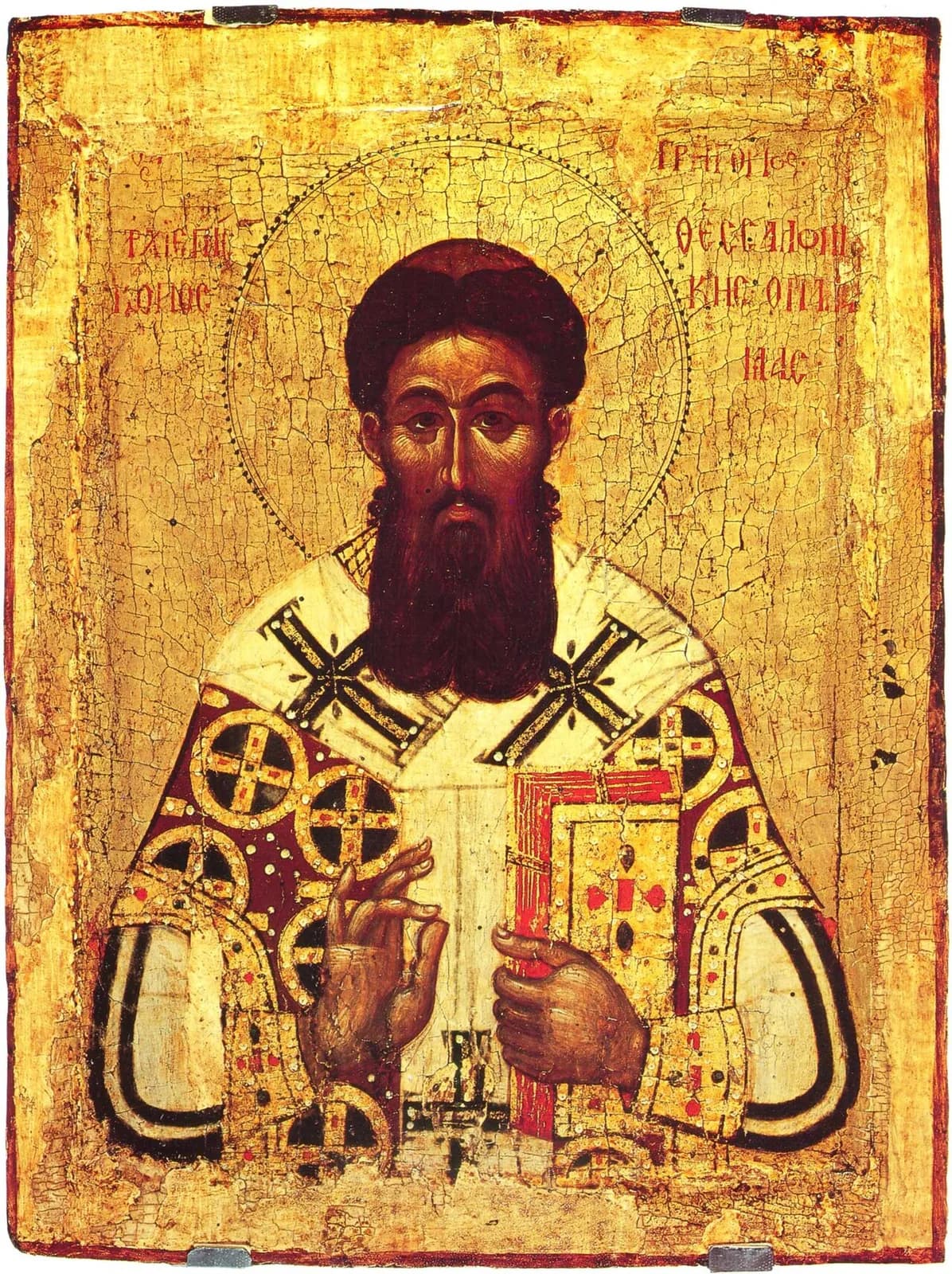
Gregory Palamas
theologianMedieval (9th-15th C) · c. 1296-1359 CE · Updated April 9, 2026
Biography
Gregory Palamas was an influential Byzantine theologian and Archbishop of Thessaloniki in the 14th century, known for his defense of Hesychasm and his contributions to Orthodox theology. At a time when the Byzantine Empire was a hub of religious and philosophical debate, Palamas emerged as a central figure in the discussions about divine-human interaction. His work focused on the mystical tradition of Hesychasm, which emphasized inner prayer and experiencing the divine light.
Born around 1296 in Constantinople, Palamas left the bustling capital for the monastic life on Mount Athos, a revered center of Orthodox spirituality. There, he immersed himself in prayer and developed his theological ideas. His career took a pivotal turn during the Hesychast controversy, where he faced off against Barlaam of Calabria, who challenged the mystical practices of the Hesychasts. Palamas argued that humans could experience God's energies, though not His essence, a distinction that became central to his theology. His position gained official recognition at the Council of Constantinople in 1351, which endorsed his views as Orthodox doctrine. Palamas continued his ecclesiastical service until his death in 1359, and his impact was such that he was canonized as a saint in 1368.
Palamas lived during a period of intense intellectual activity within the Byzantine Empire. Theological debates were rampant, fueled by the integration of Greek philosophical traditions with Christian teachings. The Hesychast controversy arose from differing views on how humans could experience God, with some opposing the mystical approach Palamas championed. The Byzantine world, rich in both spiritual and philosophical inquiry, provided the backdrop for these debates. Palamas' ideas, rooted in the distinction between God's essence and energies, became a defining moment in Orthodox thought, cemented by the Council's endorsement in 1351.
Can human beings truly encounter and participate in God — and if God is absolutely transcendent and unknowable in his essence, how is genuine communion with him possible?
The ideas
Gregory Palamas devoted his life to addressing a profound theological dilemma: how can humanity experience God if He is utterly beyond human comprehension? This question was not just theoretical for Palamas; it was deeply tied to the spiritual practices of his time. He sought to reconcile God's absolute transcendence with the mystical experiences reported by Hesychast monks, who claimed direct encounters with the divine. Palamas aimed to defend the authenticity of these experiences against critics who viewed them as mystical delusions or even heretical.
Palamas' most significant contribution was the distinction between God's essence and His energies. He posited that while God's essence remains forever unknowable, His energies are accessible to humans, allowing genuine participation in the divine. This idea responded directly to the criticisms of Barlaam of Calabria, who argued that such mystical experiences implied a pantheistic merging with God. Palamas insisted that through contemplative prayer and ascetic practices, as practiced by the Hesychasts, individuals could experience God's energies, specifically the uncreated light, without compromising His transcendence. This articulation protected the mystical experiences of the monks and integrated them into Orthodox theology.
Beyond this, Palamas contributed to the understanding of theosis, or deification, as the ultimate goal of Christian life. He provided a systematic theological framework for the belief that humans could become partakers of the divine nature through God's energies. This concept had roots in Eastern Christianity, but Palamas gave it a structured explanation that linked it to the practices of the Hesychasts. Additionally, by defending traditional Orthodox spirituality against the rising tide of Western scholasticism, Palamas emphasized that rational analysis could not fully comprehend divine mysteries. His writings and debates, notably with Barlaam, formed the basis of his defense.
The essence-energies distinction stands as Palamas' signature argument. It uniquely reconciled the seemingly irreconcilable: God's absolute transcendence with the possibility of human participation in the divine. By asserting that humans can experience God's energies without accessing His essence, Palamas provided a theological framework that validated the mystical experiences of Hesychast monks. This reasoning was compelling because it offered a way for believers to engage with the divine without undermining God's otherness. It changed the landscape of Orthodox theology by affirming that true communion with God is possible, deepening the spiritual life of the church and preserving its mystical traditions.
What changed
Before Gregory Palamas, Byzantine Christians struggled with understanding how humans could connect with a God who seemed utterly beyond reach. They believed God's essence was completely unknowable, which led to anxiety about the possibility of true communion with Him. Mystical experiences lacked a solid theological foundation, and the concept of becoming one with God, while present, was not well-defined as the goal of Christian life. The faithful grappled with these tensions, unsure how to reconcile God's transcendence with personal spiritual experience.
Gregory Palamas changed this landscape by introducing a vital distinction between God's essence and energies. He argued that while God's essence remained unknowable, His energies were accessible and allowed for genuine interaction. This idea reshaped how believers approached God, offering a way to experience Him without diminishing His transcendence. Palamas also gave Hesychast prayer, a mystical practice, a firm theological grounding. He affirmed the vision of the uncreated light as a valid encounter with God, validating these spiritual experiences. Palamas further emphasized theosis — deification — as the ultimate aim of Christian life, achievable by participating in God's energies.
The impact of Palamas' theology reverberated through the centuries, directly influencing the Hesychast movement and shaping Eastern Orthodox spirituality. The Council of Constantinople in 1351 solidified his teachings as Orthodox doctrine. Later, the Philokalia, a collection of spiritual texts, and the Neo-Palamite revival drew heavily from his ideas, ensuring his influence endured. Today, Palamas' thoughts remain central to Orthodox theology and practice, demonstrating their lasting power and relevance.
Disputed legacy
Gregory Palamas introduced the distinction between God's essence and energies, which sparked considerable controversy. Critics argued that this duality within God risked theological confusion and division, particularly between Eastern Orthodox and Western Christian traditions. Barlaam of Calabria and other Western theologians saw this as a departure from the simplicity of God, a core tenet they held dear. Palamas also emphasized mystical experience over reason, which angered scholastic theologians who prioritized intellectual discourse. His ideas complicated ecumenical relations, creating a deep rift between Eastern Orthodoxy and Western Christianity. Critics worried about the anthropological implications of Palamas's theology, particularly the notion that humans could participate in divine energies without merging with God's essence. This challenged the clear boundary between Creator and creation, further fueling theological disputes.
The Council of Constantinople in 1351 marked the darkest chapter of the Palamite controversy. This council solidified the theological positions that Palamas had advocated. The Byzantine Empire saw significant strife as debates raged over his ideas. These debates weren't merely academic; they had political ramifications that entrenched divisions between Eastern and Western Christianity. The council's decisions made reconciliation difficult, cementing a theological divide that echoed through the centuries. The endorsement of Palamas's views as Orthodox dogma alienated Western Christians, setting the stage for ongoing discord and mistrust.
Some modern scholars claim that Palamas's theology offers valuable insights into the mystery of God and human participation in divine life. They argue that his emphasis on the mystical experience adds depth to understanding God's interaction with humanity. Yet, the core criticisms remain potent. The essence-energies distinction continues to trouble ecumenical efforts. While some dialogues attempt to bridge the gap, the historical divisions rooted in Palamas's ideas persist. The Council of Constantinople's decisions still stand as a testament to the enduring rift, reminding us of the complexities involved in reconciling these theological disparities.
Legacy
After the Council of Constantinople in 1351, Gregory Palamas emerged not as a condemned figure but as a theological victor. His teachings were enshrined as Orthodox dogma, securing his place in the Byzantine Church. Serving as the Archbishop of Thessaloniki, Palamas continued to influence the church until his death in 1359. The Eastern Orthodox Church canonized him as a saint in 1368, cementing his legacy within the faith. His ideas were no longer controversial but rather foundational, marking a significant shift in the church's theological landscape.
Palamas’ teachings on Hesychasm and the distinction between God's essence and energies became central to Eastern Orthodox theology. His influence spread particularly through the monastic communities on Mount Athos, where monks embraced his insights on mystical prayer and divine experience. These ideas did not remain confined to Byzantium; they traveled to Russia and the Balkans, finding a receptive audience eager for spiritual depth. The Russian Orthodox Church, in particular, integrated his teachings, which helped shape its theological discourse for centuries. Palamas' ideas resonated with those seeking a deeper understanding of divine presence beyond intellectual comprehension.
Today, Gregory Palamas' theological contributions continue to shape Eastern Orthodox practice and belief. Hesychasm, the contemplative prayer practice he championed, remains a vital aspect of Orthodox spirituality. The concept of theosis, or becoming one with God, is still a central tenet. His works are studied in seminaries and universities, influencing modern theological discussions on divine-human interaction. Each year, the Eastern Orthodox Church celebrates Saint Gregory Palamas Sunday during Lent, a testament to his enduring impact. Palamas' legacy lives on, bridging the medieval and modern worlds through his profound insights into the nature of God's presence in human life.
Continue reading with a Scholar plan
Upgrade to ScholarCommon questions
- What is Gregory Palamas most known for in Christian history?
- Gregory Palamas is most known for his defense of Hesychasm, a mystical tradition of contemplative prayer in the Eastern Orthodox Church. He articulated the distinction between God's essence and energies, arguing that humans can experience God's energies while His essence remains inaccessible.
- What were Gregory Palamas's most important works?
- Gregory Palamas's most important works include 'The Triads' (In Defense of the Holy Hesychasts), written around 1338, and 'One Hundred and Fifty Chapters.' His 'Homilies' also contribute significantly to his theological legacy.
- What were Gregory Palamas's most influential theological ideas?
- Palamas's influential ideas include the distinction between God's unknowable essence and His knowable energies, allowing humans to participate in God without merging with His essence. He also emphasized Hesychast prayer and the vision of the uncreated light, as well as the concept of theosis, or deification, as the ultimate goal of Christian life.
- What controversies did Gregory Palamas engage in — and what was at stake?
- Gregory Palamas engaged in the Hesychast Controversy, primarily against Barlaam of Calabria, who criticized the Hesychast practice of prayer and the vision of the uncreated light. At stake was the legitimacy of mystical experiences and the nature of human participation in the divine.
- How did Gregory Palamas influence later Christianity — Catholic, Protestant, and beyond?
- Palamas's theology significantly shaped Eastern Orthodox spirituality and theology, particularly in the emphasis on mystical experience and theosis. While his ideas were less influential in Catholic and Protestant traditions, they have gained interest in ecumenical dialogues and among those exploring Eastern Christian spirituality.
- What did Gregory Palamas get wrong, or what ideas have been seriously disputed?
- Palamas's distinction between essence and energies has been disputed, particularly by those who argue it creates a duality in God. Critics, especially from Western traditions, have questioned the theological coherence and scriptural basis of his ideas.
- Is Gregory Palamas considered a saint? By which traditions?
- Gregory Palamas is considered a saint in the Eastern Orthodox Church, where he is celebrated on the second Sunday of Great Lent, known as the Sunday of Saint Gregory Palamas. He is not recognized as a saint in the Roman Catholic or Protestant traditions.
- Why does Gregory Palamas still matter today?
- Gregory Palamas matters today for his contributions to the understanding of mystical experience and the nature of divine-human interaction. His ideas continue to influence Eastern Orthodox theology and are increasingly explored in ecumenical dialogues and studies of Christian mysticism.
- What is the most surprising or counterintuitive thing about Gregory Palamas?
- One surprising aspect of Gregory Palamas is his ability to synthesize mystical experience with rigorous theological argumentation, bridging the gap between experiential and doctrinal Christianity. His defense of mystical prayer practices was both deeply traditional and innovative.
- What is the best place to start reading Gregory Palamas?
- The best place to start reading Gregory Palamas is 'The Triads,' which provides a comprehensive introduction to his theological arguments and defense of Hesychasm. This work outlines his key ideas on the essence-energies distinction and mystical prayer.