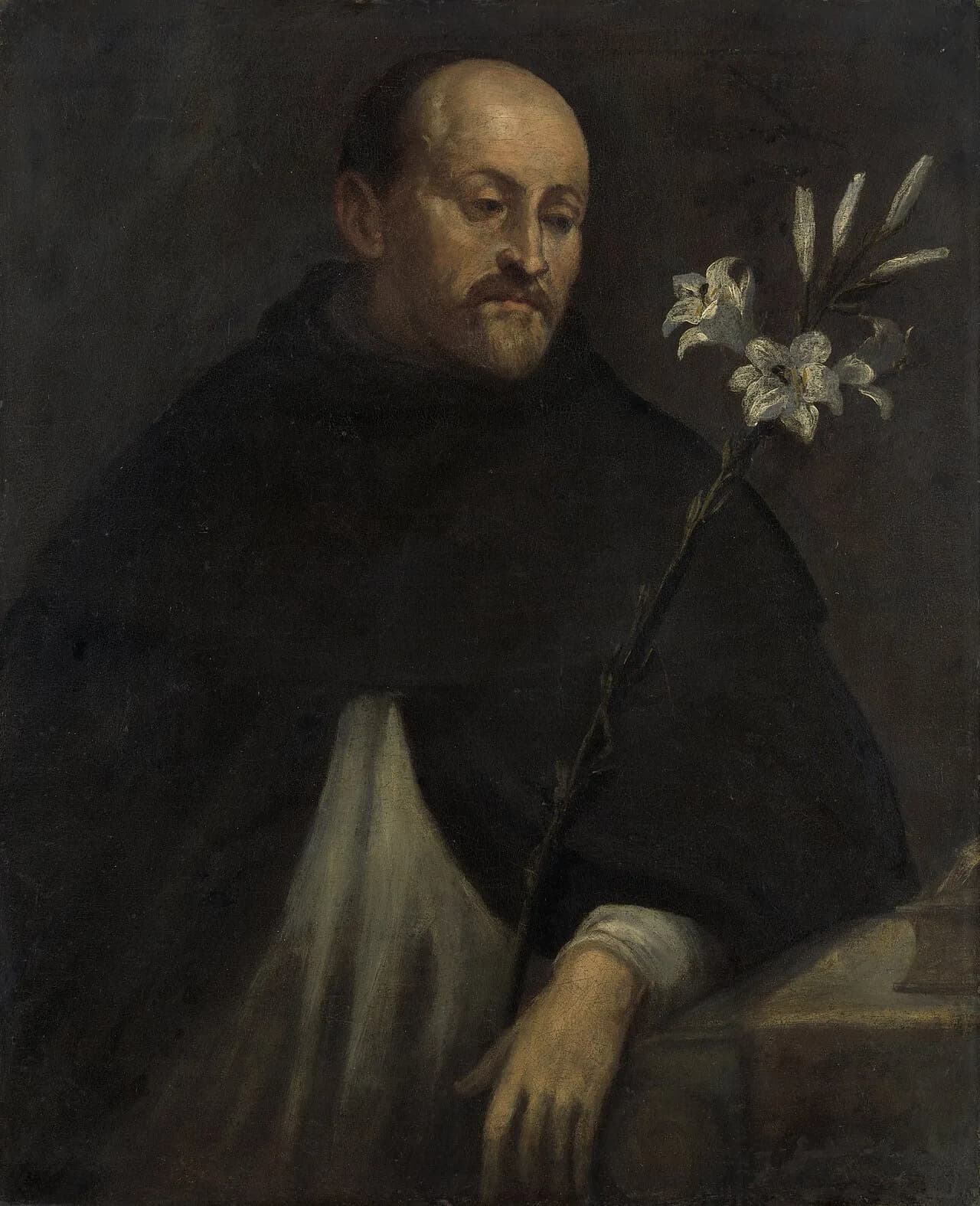
Dominic de Guzman
theologianMedieval (9th-15th C) · c. 1170-1221 CE · Updated April 9, 2026
Biography
Dominic de Guzman was a Spanish priest and founder of the Order of Preachers, commonly known as the Dominicans, in the early 13th century. He became well-known for his efforts against Catharism in Languedoc, a region in southern France. This was a time when the Catholic Church faced significant challenges from various heretical movements, and Dominic's mission was to counter these through preaching and education.
Born around 1170 in Caleruega, in the Kingdom of Castile, Dominic grew up in a period of religious fervor and conflict. By 1216, he secured papal approval from Pope Honorius III to establish the Dominicans, a religious order dedicated to teaching and preaching. Dominic spent years in Languedoc, confronting the Cathars, who rejected many Catholic doctrines. His approach emphasized poverty and learning, believing that a return to apostolic simplicity and intellectual engagement could win back those swayed by heresy. He died on August 6, 1221, in Bologna, Italy, and was canonized by Pope Gregory IX in 1234.
The early 13th century was rife with religious upheaval. Heretical movements like Catharism questioned the Church's authority, prompting the Church to respond with both the sword and the word. The Albigensian Crusade, a brutal military campaign, aimed to eradicate Catharism through force. In contrast, Dominic's vision focused on reform from within, using the power of preaching and education to strengthen the Church's teachings. This dual approach reflected a broader trend towards apostolic poverty and intellectual rigor as tools for both combating heresy and revitalizing the Church.
What is the most effective response to heresy — coercion and crusade, or poverty, learning, and reasoned argument?
The ideas
Dominic de Guzman tackled the problem of heresy in a time when the Church's response was often forceful and ineffective. The rise of Catharism, especially in the region of Languedoc, posed a significant challenge to the Church's authority and teachings. Dominic saw that traditional methods — such as excommunication and military campaigns — failed to convert hearts and minds. He asked a pivotal question: How can the Church genuinely engage with heretics to bring them back to the faith? This question drove his life's work, pushing him to seek alternatives to coercion, emphasizing persuasion through moral integrity and reasoned dialogue.
Dominic's most crucial ideas centered around poverty, education, and preaching. First, he championed mendicant preaching, insisting that preachers live in poverty among the people, much like Jesus and the apostles. This lifestyle gave them moral authority, contrasting sharply with the wealthy, often corrupt image of the Church. Second, he advanced the notion of apostolic poverty as an authentic credential for preaching. By living simply, preachers could more effectively communicate the Gospel and counter heretical claims. Third, Dominic emphasized education as a bedrock of evangelism. He believed that well-informed clergy, capable of reasoned arguments, were essential to counter the intellectual challenges posed by heretics.
In addition to these core ideas, Dominic's legacy includes the founding of the Dominican Order in 1216. This order institutionalized his vision, creating a network of preachers dedicated to study and teaching. The Dominicans became known for their rigorous intellectual training and commitment to poverty, setting a new standard for religious life. Although not definitively his creation, Dominic's association with the Rosary highlights his emphasis on prayer and meditation as tools for personal piety and reflection. This practice spread widely within the Church, fostering a devotional life that complemented intellectual engagement.
Dominic's signature argument was that the Church should address heresy using the same tools as the apostles: poverty, learning, and rational discourse. This approach was compelling because it combined moral integrity with intellectual rigor, presenting a model of Christian witness that resonated deeply with both clergy and laity. By shifting the focus from force to persuasion, Dominic changed the Church's engagement strategy, laying the groundwork for a more enlightened approach to theological dissent. His ideas not only addressed the immediate challenges of his time but also influenced the Church's methods of evangelism and discourse for centuries to come.
What changed
Before Dominic de Guzman, the Church dealt with heresy mainly through force and condemnation. Military campaigns and political maneuvers were the preferred methods to quash dissent, as seen in the Church's dealings with the Cathars. The clergy and monastic orders were often wealthy and removed from the lives of ordinary people. They relied on their status rather than engaging directly with the masses. Education was not systematically used to counter heretical ideas, and wealth was often seen as a sign of God's favor. The Church lacked a cohesive strategy for intellectual engagement with heresy and for reaching the common people through preaching.
Dominic de Guzman changed the Church's approach by promoting mendicant preaching. He insisted that preachers live in poverty and engage directly with the people, arguing that apostolic poverty was a credential for authentic preaching. Dominic also championed the use of learning and reasoned argument to engage with heretics. He established schools and emphasized theological education, laying the groundwork for the Dominican Order. This order became a significant force in the Church and inspired other mendicant movements, including the Franciscans. Dominic's methods forced the Church to reconsider its reliance on force alone, introducing dialogue and education as tools for addressing heresy.
The consequences of Dominic's reforms rippled through the Church and beyond. His emphasis on education and reasoned argument laid the groundwork for the Scholastic movement, which sought to reconcile faith with reason. The Dominican Order produced influential theologians, most notably Thomas Aquinas, who became central figures in theological debate. The mendicant model inspired other religious orders and movements that prioritized poverty and direct engagement with the laity. Without Dominic, the intellectual and spiritual landscape of the Church might have remained stagnant. His legacy endures in the institutions he inspired, with the Dominicans still active today in over 100 countries.
Disputed legacy
Dominic de Guzman, founder of the Dominican Order, faced criticism on several fronts. His association with the Albigensian Crusade casts a long shadow over his legacy. Historians point to his presence in Languedoc during the brutal campaign against the Cathars, raising questions about his stance on violence in religious conflict. Critics also highlight how his methods of debate and persuasion laid the groundwork for the Inquisition, infamous for its coercive practices. Dominic preached apostolic poverty, but this ideal created internal strife within his order, as members struggled with the harsh realities of strict poverty. His emphasis on education, while enriching the Church's intellectual tradition, alienated those who preferred simpler spiritual paths.
Dominic's indirect link to the Albigensian Crusade remains the darkest chapter of his legacy. The crusade aimed to eradicate the Cathar heresy through force, leading to widespread violence and persecution. Although Dominic himself advocated for persuasion over violence, his presence during this campaign has tied him to its brutal methods. The consequences were severe, with entire towns decimated and countless lives lost. The association with such bloodshed is difficult to reconcile with his personal commitment to non-violent dialogue.
Some scholars argue that Dominic's intentions have been misrepresented by history. They claim that his focus on non-violent persuasion, education, and poverty was overshadowed by later developments. Yet, these defenses do not erase the impact of his indirect association with the Albigensian Crusade or the eventual transformation of his methods into the coercive Inquisition. The criticisms remain potent. The verdict on Dominic's legacy still stands: his presence during a violent crusade remains a contentious aspect of his historical role.
Legacy
After the death of Dominic de Guzman in 1221, his vision and mission were not only preserved but thrived under the Church's blessing. Unlike many reformers who faced condemnation, Dominic garnered support because his fervent battle against heresy aligned with the Church's objectives. In 1216, Pope Honorius III officially recognized the Order of Preachers, which Dominic founded. This recognition allowed the Order to flourish and establish a formidable presence across Europe. Instead of being marginalized, Dominic's work received the Church's endorsement, securing his legacy and ensuring the continuation of his mission.
The teachings and methods of Dominic de Guzman persisted primarily through the rapid expansion of the Dominican Order. Dominicans became central figures in the burgeoning intellectual life of medieval Europe. They established themselves in universities and became known for their scholarship and commitment to teaching. Names like Thomas Aquinas stand out as direct products of Dominican influence, with Aquinas himself being one of the most significant theologians of the time. The Dominicans spread across regions like Italy, France, and beyond, championing a methodical and reasoned defense of Church doctrine. Their role in education and intellectual debate cemented their place as key players in shaping the Church's response to doctrinal challenges during the medieval period.
Today, the legacy of Dominic de Guzman thrives in the continued global presence of the Dominican Order. They maintain a strong foothold in education and theological scholarship, operating numerous schools and universities. Dominican institutions continue to emphasize reasoned dialogue and a commitment to truth, reflecting their founder's original vision. A tangible example of this enduring legacy is the Pontifical University of St. Thomas Aquinas in Rome, also known as the Angelicum. This institution stands as a testament to the Dominican dedication to education and intellectual pursuit, echoing Dominic's enduring impact on the Church and the world.
Continue reading with a Scholar plan
Upgrade to ScholarCommon questions
- What is Dominic de Guzman most known for in Christian history?
- Dominic de Guzman is most known for founding the Order of Preachers, commonly known as the Dominicans, in the early 13th century. His order emphasized preaching, education, and poverty as means to combat heresy, particularly Catharism in southern France.
- What were Dominic de Guzman's most important works?
- Dominic de Guzman did not leave behind any major written works. His most important contribution was the establishment of the Dominican Order, which institutionalized his vision of mendicant preaching and education.
- What were Dominic de Guzman's most influential theological ideas?
- Dominic's influential ideas included the use of mendicant preaching to address heresy, emphasizing poverty and learning as credentials for effective evangelism. He also promoted the use of the Rosary and believed in the power of education as a tool for spreading the Christian faith.
- What controversies did Dominic de Guzman engage in — and what was at stake?
- Dominic engaged in controversies surrounding the Cathar heresy in Languedoc, which challenged the authority and teachings of the Catholic Church. At stake was the Church's ability to maintain doctrinal unity and authority in the face of growing dissent.
- How did Dominic de Guzman influence later Christianity — Catholic, Protestant, and beyond?
- Dominic's emphasis on education and preaching influenced the Catholic Church's approach to evangelism and theological training. The Dominican Order became a major force in the Catholic Church, contributing to the intellectual and spiritual life of Christianity, and indirectly influencing Protestant reformers who valued education and scripture.
- What did Dominic de Guzman get wrong, or what ideas have been seriously disputed?
- Some critics argue that Dominic's approach to heresy, while less violent than others, still contributed to the Church's repressive measures against dissent. The effectiveness and ethical implications of his methods in dealing with heresy have been subjects of debate.
- Is Dominic de Guzman considered a saint? By which traditions?
- Yes, Dominic de Guzman is considered a saint in the Roman Catholic Church. He was canonized by Pope Gregory IX in 1234.
- Why does Dominic de Guzman still matter today?
- Dominic de Guzman matters today because his founding of the Dominican Order continues to impact the Catholic Church through its emphasis on education, preaching, and theological scholarship. His legacy influences contemporary discussions on how to engage with differing beliefs and the role of poverty in religious life.
- What is the most surprising or counterintuitive thing about Dominic de Guzman?
- One surprising aspect of Dominic de Guzman is that despite his significant influence, he left no major written theological works, focusing instead on institutional and pastoral contributions. His legacy is primarily carried through the order he founded rather than personal writings.
- What is the best place to start reading Dominic de Guzman?
- Since Dominic de Guzman did not leave behind written works, the best place to start is with historical accounts of his life and the founding of the Dominican Order, such as 'The Life of Saint Dominic' by Bede Jarrett or 'Saint Dominic: The Story of a Preaching Friar' by Donald J. Goergen.