Mary, Mother of Jesus · Updated August 15, 2026
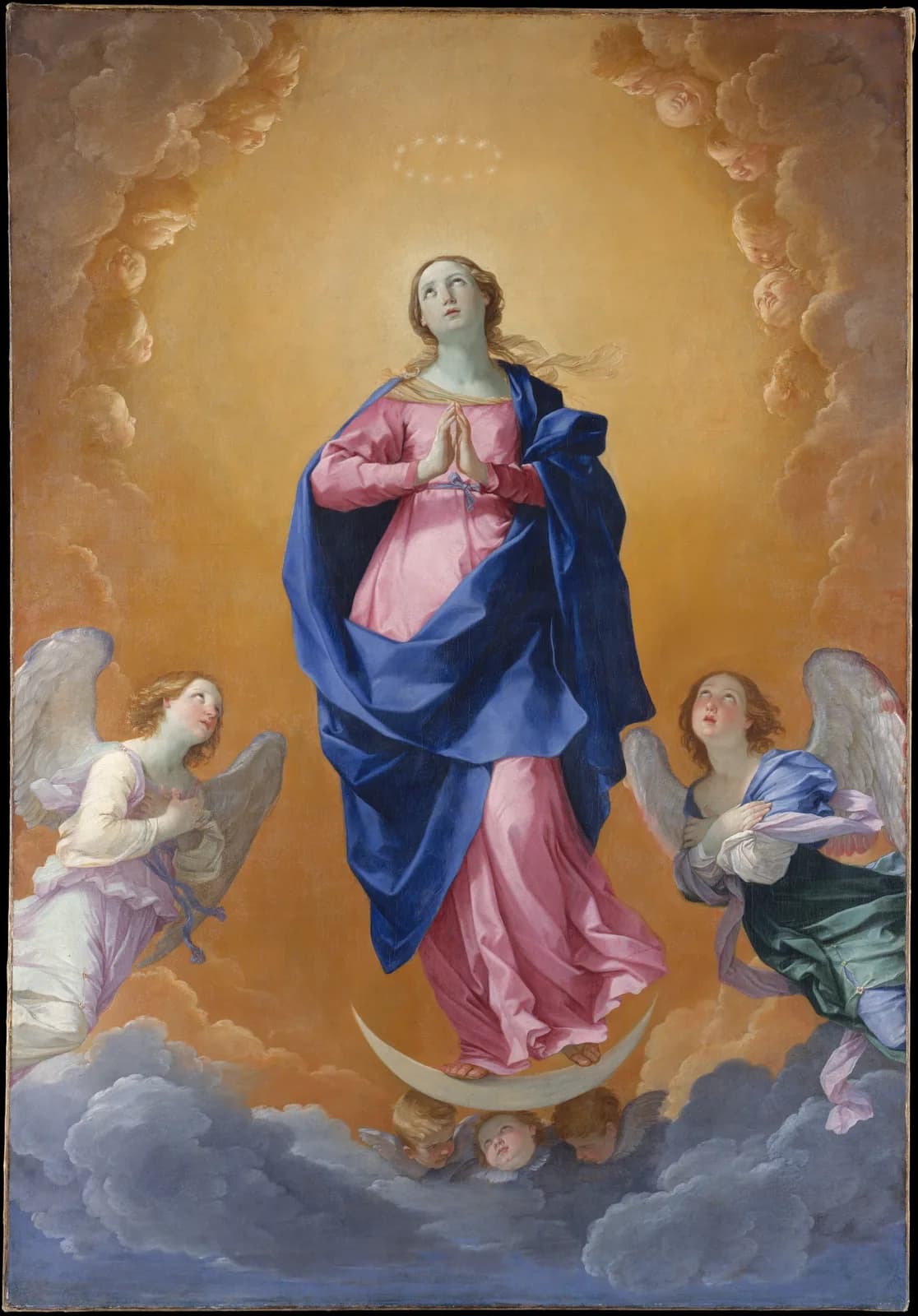
The Immaculate Conception is the Catholic doctrine that Mary, the mother of Jesus, was preserved from original sin from the moment of her own conception in her mother's womb. It is not, as is commonly mistaken, a doctrine about the conception of Jesus — that is the Virgin Birth. The Immaculate Conception concerns Mary's beginning: the Catholic Church teaches that by a singular Grace and privilege of God, Mary was preserved from the stain of Original Sin that all other humans inherit from Adam. Pope Pius IX defined this as dogma on December 8, 1854, in the apostolic constitution Ineffabilis Deus.
The doctrine developed slowly and was not without serious opposition within the medieval church. Thomas Aquinas, the most influential Catholic theologian, argued against it on the grounds that it would seem to exempt Mary from redemption by Christ — how can she need a savior if she was never under sin? Duns Scotus proposed the resolution in the 13th century that became the standard Catholic answer: Mary was redeemed in advance, preemptively, by the merits of Christ's future Passion. This "preservative redemption" allowed the Immaculate Conception to be compatible with Mary's dependence on Christ as savior. The Franciscan order championed this position; the Dominicans, following Aquinas, opposed it for centuries. The argument continued until 1854.
The scriptural foundation is indirect. Catholics cite Luke 1:28, where the angel Gabriel greets Mary as kecharitomene — "full of
The Immaculate Conception does not mean Mary didn't need a savior — it means Christ saved her first, preemptively, before she could contract sin.
The Immaculate Conception is the Catholic doctrine most likely to produce incomprehension in non-Catholic Christians, and the incomprehension is almost always the same mistake , confusing it with the Virgin Birth. Once that confusion is cleared, the doctrinal problem emerges. If Mary was preserved from original sin, did she need Christ as savior? Duns Scotus's answer remains the official Catholic resolution: Christ's redemption was applied to Mary retroactively in anticipation of his Passion. She was redeemed perfectly, before the fact. This is called preservative redemption, and it requires a particular view of how Grace and time interact , God, not bound by chronology, applies the merits of the Cross before the Cross occurred.
Protestant theology rejects this on multiple grounds. First, the move from "full of grace" in Luke 1:28 to "conceived without sin" is not exegetically obvious , kecharitomene means graced, not sinless. Second, the doctrine requires an inference from silence: the New Testament says nothing about the circumstances of Mary's own conception. Third, Scripture's universal statement , "all have sinned and fall short of the glory of God" (Romans 3:23) , seems to leave no exception. Catholic exegetes argue that "all" refers to all under condemnation, not that every individual without exception contracted sin in the ordinary way. This is a defensible reading but not a universally accepted one.
The Immaculate Conception carries cultural weight independent of the doctrinal dispute. The feast on December 8 is a holy day of obligation in the Catholic Church. The apparitions at Lourdes in 1858 gave the doctrine popular resonance that centuries of theological argument could not. When Mary reportedly identified herself using the precise phrase the Church had formally defined only four years earlier, the coincidence became, for millions of Catholics, something close to divine Confirmation. Lourdes draws approximately six million pilgrims annually, making it one of the world's largest Pilgrimage destinations , powered almost entirely by a doctrine most visitors cannot define.
Continue reading with a Scholar plan
Upgrade to Scholar