How Did James Son of Alphaeus Die? The Apostle History Lost
James son of Alphaeus is the least documented of the twelve. His death accounts are almost entirely legendary.
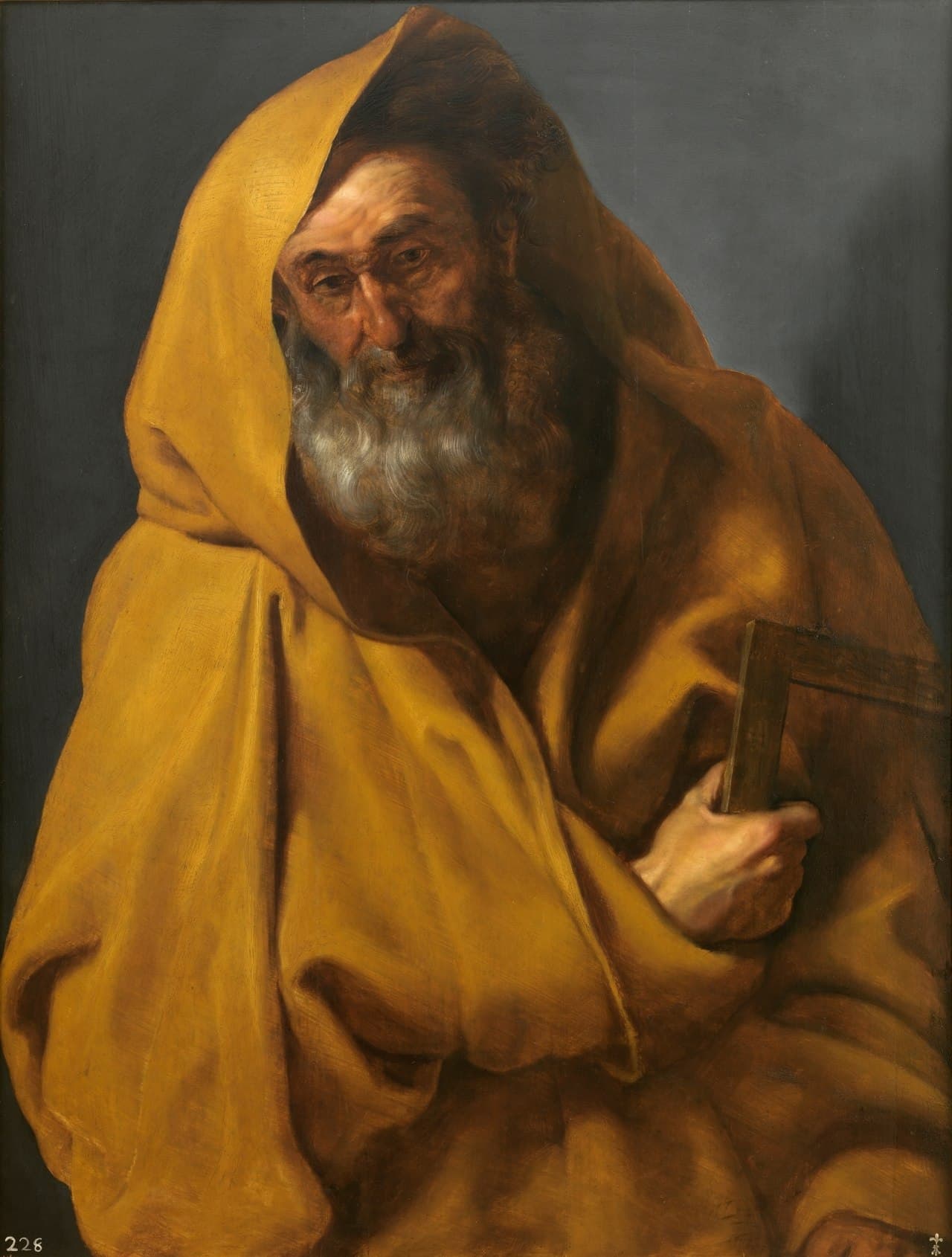
James son of Alphaeus is the apostle about whom the least is known in every respect — including how he died. He appears in the apostle lists and nowhere else in the canonical New Testament. The traditions of his death are late, geographically scattered, and sometimes contradictory. An honest accounting of his martyrdom requires beginning with the acknowledgment that we effectively do not know what happened to him, and that the traditions we have cannot be meaningfully evaluated without independent corroboration that does not exist.
Who Was James Son of Alphaeus?
He is called 'James the Less' or 'James the Younger' in the tradition, most likely to distinguish him from James son of Zebedee, who was beheaded by Herod Agrippa I. He appears in all four apostle lists in the New Testament and has no speaking part, no individual scene, and no characterization in any canonical text. Some interpreters in the Western church have identified him with James the brother of the Lord, who led the Jerusalem church and was killed around 62 AD, but this identification is rejected by most modern scholars. If they are different people, James son of Alphaeus is effectively unknown after his initial calling.
The Traditional Account
The traditions of James son of Alphaeus's death are inconsistent across sources. Some locate his martyrdom in Jerusalem, where he is said to have been thrown from the Temple and beaten to death — details that closely mirror the death of James the brother of the Lord as recorded by Josephus and Hegesippus. The conflation of the two figures in some traditions creates additional confusion.
Other traditions send James son of Alphaeus to Egypt, where he is said to have preached and been crucified in the city of Ostracine. The Western martyrology places his feast alongside Philip on May 3, connecting him traditionally to a martyrdom in Persia or Egypt.
None of these traditions is attested earlier than the fourth century, and none is corroborated by independent evidence.
What Ancient Sources Say
Eusebius, Ecclesiastical History 1.13 (approx. 310 AD) — does not address James son of Alphaeus's death specifically.
Pseudo-Dorotheus (date uncertain, probably fifth-sixth century) — assigns martyrdom to Egypt; one of the earliest sources for this tradition.
Western Martyrology (various dates) — associates James son of Alphaeus with Philip and a martyrdom commemorated May 3.
The Historical Assessment
The death of James son of Alphaeus is, in the judgment of virtually all historians who have examined the apostolic death traditions, historically unknown. Bart Ehrman, writing in Lost Christianities, notes that the traditions for James son of Alphaeus are among the latest and least independently attested of any apostle. The Jerusalem crucifixion account appears to be a version of the death of James the brother of the Lord incorrectly applied to a different person. The Egyptian tradition has no early support.
The most historically responsible position is to say plainly: we do not know how James son of Alphaeus died. He went somewhere. He presumably preached. The historical record does not follow him.
Historical Confidence Rating: UNKNOWN. No reliable historical evidence exists for how James son of Alphaeus died. The traditions are late, geographically inconsistent, and in some cases appear to be misapplications of the better-attested death of James the brother of the Lord.
Key Ancient Sources
Pseudo-Dorotheus (fifth-sixth century AD) — assigns Egyptian martyrdom; earliest source for this tradition.
Western Martyrology — May 3 commemoration alongside Philip.
Further Reading
Bart D. Ehrman, Lost Christianities (2003) — critical analysis of apostolic traditions including the lesser-documented apostles.
John P. Meier, A Marginal Jew, Volume 3 (2001) — examines the problem of identifying figures named James in the early church.
This article is part of our series on the deaths of the apostles: Peter, Andrew, James son of Zebedee, John, Philip, Matthew, Thomas, Thaddaeus, Simon the Zealot, Judas Iscariot, Matthias, Bartholomew, and Paul.