How Did Paul the Apostle Die? Beheading in Rome Under Nero
Paul is traditionally beheaded in Rome under Nero. The evidence is stronger than for almost any other apostle.
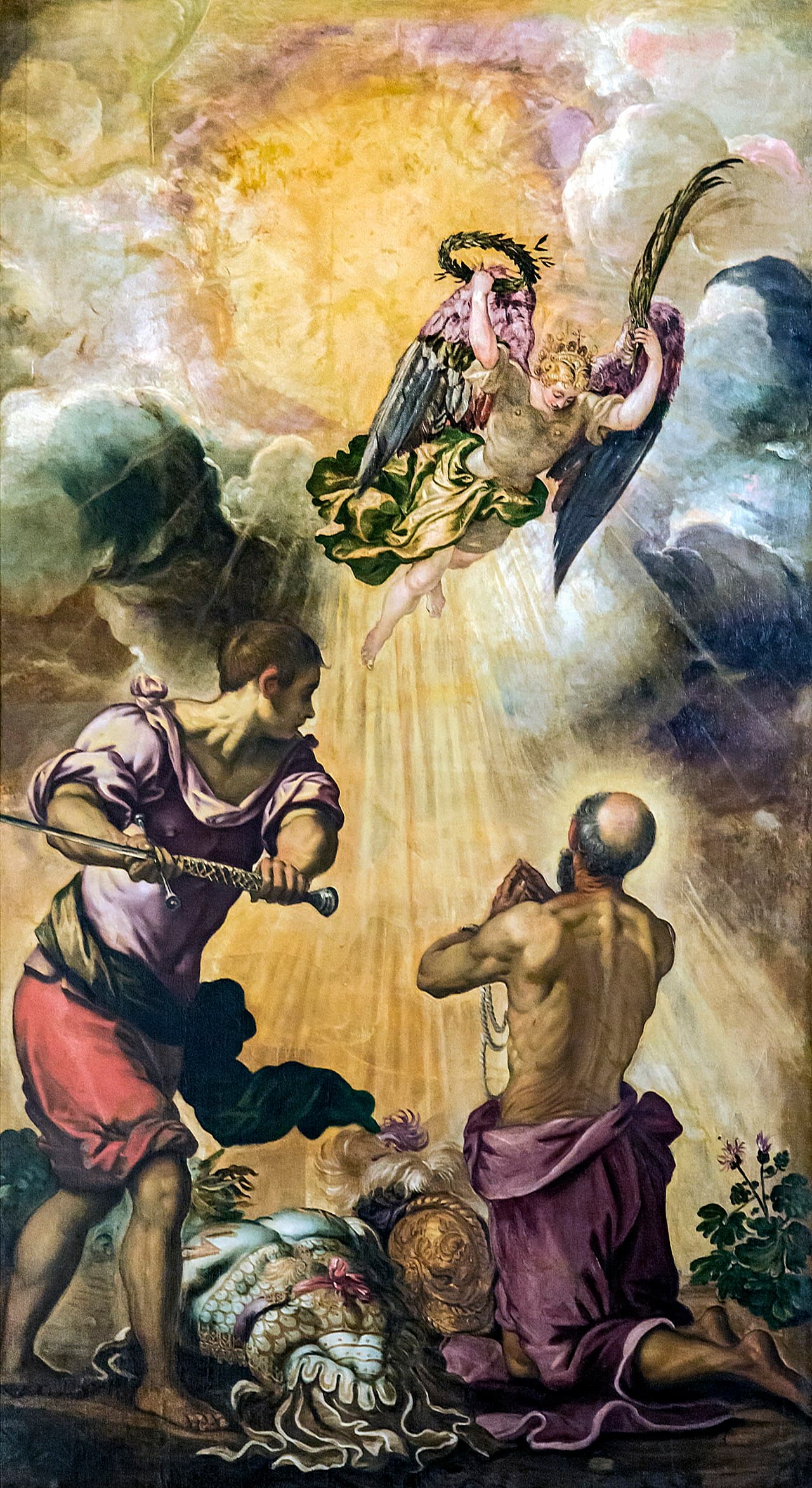
Paul of Tarsus is traditionally said to have been beheaded in Rome under the Emperor Nero, probably between 64 and 67 AD. As a Roman citizen, he was entitled to decapitation rather than crucifixion — the standard method for non-citizens. The tradition of his Roman martyrdom is among the earliest and most consistently attested for any figure in the apostolic generation. Excavations beneath the Basilica of Saint Paul Outside the Walls in 2009 found a second-century sarcophagus inscribed PAULO APOSTOLO MART — Paul, Apostle, Martyr — which provides physical corroboration of where the early church believed he was buried.
Who Was Paul?
Paul was born Saul of Tarsus in Cilicia (modern southern Turkey), a Roman citizen by birth, educated in Jerusalem at the feet of the Pharisaic scholar Gamaliel. He persecuted the early church, was present at the stoning of Stephen, and was traveling to Damascus to arrest Christians when a vision of the risen Jesus blinded and converted him. He became the apostle to the Gentiles, made three major missionary journeys across Asia Minor and Greece, wrote at least seven and possibly thirteen New Testament letters, and was imprisoned in Rome for at least two years. The Acts of the Apostles ends with him under house arrest in Rome, which most scholars date to approximately 60-62 AD. His subsequent fate is not recorded in the canonical text.
The Traditional Account
The tradition of Paul's martyrdom in Rome is attested from the late first century. Clement of Rome, writing to the Corinthian church around 96 AD, refers to Paul as having 'given his testimony before the rulers' and having 'departed from the world and gone to the holy place.' This language is understood by most scholars as a reference to martyrdom. Clement writes from Rome within a generation of the events.
Ignatius of Antioch, writing around 107 AD, refers to Paul in connection with Rome in a way that implies his death there. Dionysius of Corinth (approx. 170 AD) states explicitly that Peter and Paul 'taught together in Italy, and suffered martyrdom at the same time.'
The method — beheading — is consistent with Roman practice for Roman citizens condemned to death and is attested by Tertullian (writing around 200 AD), who states that Paul was 'cut short' in Rome. The location is traditionally identified as Tre Fontane (Three Fountains) on the Ostian Way, where three springs are said to have erupted where Paul's severed head bounced on the ground. This detail belongs to legend; the location of the execution itself may preserve a genuine tradition.
What Ancient Sources Say
Clement of Rome, First Epistle to the Corinthians (approx. 96 AD) — refers to Paul's 'testimony before the rulers' and departure from the world; widely read as martyrdom.
Ignatius of Antioch, Epistle to the Romans (approx. 107 AD) — implies Roman martyrdom of Paul alongside Peter.
Dionysius of Corinth (approx. 170 AD) via Eusebius — states explicitly that Paul taught in Italy and suffered martyrdom.
Tertullian, Scorpiace and Against Marcion (approx. 200 AD) — states Paul was beheaded in Rome.
Sarcophagus inscription beneath Basilica of Saint Paul Outside the Walls (second century AD) — PAULO APOSTOLO MART; physical evidence of the early Christian belief in his martyrdom and burial site.
The Historical Assessment
The Roman martyrdom of Paul is historically among the most secure facts about any apostle. The evidence includes: a letter written in Rome within a generation of his death (Clement), multiple independent attestations within 150 years of the event, physical corroboration in the burial site, and the internal consistency of the Roman citizenship/beheading detail with what is known about Roman law.
Historian Martin Hengel treats the Roman martyrdom of Paul as historically established. N.T. Wright, examining the evidence in Paul and the Faithfulness of God, notes that no serious historian disputes the Roman martyrdom, though the precise date and the circumstances of the trial that preceded it remain uncertain. The beheading detail cannot be independently confirmed but is plausible and early.
Historical Confidence Rating: PLAUSIBLE. The death in Rome under Nero is attested by multiple independent sources within two generations, corroborated by physical evidence at the burial site, and consistent with Roman legal practice for citizens. The specific detail of beheading is early and plausible but not independently confirmed.
Key Ancient Sources
Clement of Rome (approx. 96 AD) — earliest reference to Paul's martyrdom, from Rome.
Dionysius of Corinth (approx. 170 AD) — explicit statement of Roman martyrdom.
Tertullian (approx. 200 AD) — beheading in Rome.
Second-century sarcophagus inscription, Basilica of Saint Paul Outside the Walls — PAULO APOSTOLO MART.
Further Reading
N.T. Wright, Paul and the Faithfulness of God (2013) — comprehensive scholarly treatment of Paul's life and death, including the Roman martyrdom tradition.
Jerome Murphy-O'Connor, Paul: A Critical Life (1996) — historical biography of Paul with critical analysis of the martyrdom evidence.
This article is part of our series on the deaths of the apostles: Peter, Andrew, James son of Zebedee, John, Philip, Matthew, Thomas, James son of Alphaeus, Thaddaeus, Simon the Zealot, Judas Iscariot, Matthias, and Bartholomew.