How Did Matthew the Apostle Die? Martyr or Natural Death?
Matthew is said to have died in Ethiopia or Persia. The early accounts disagree on nearly every detail.
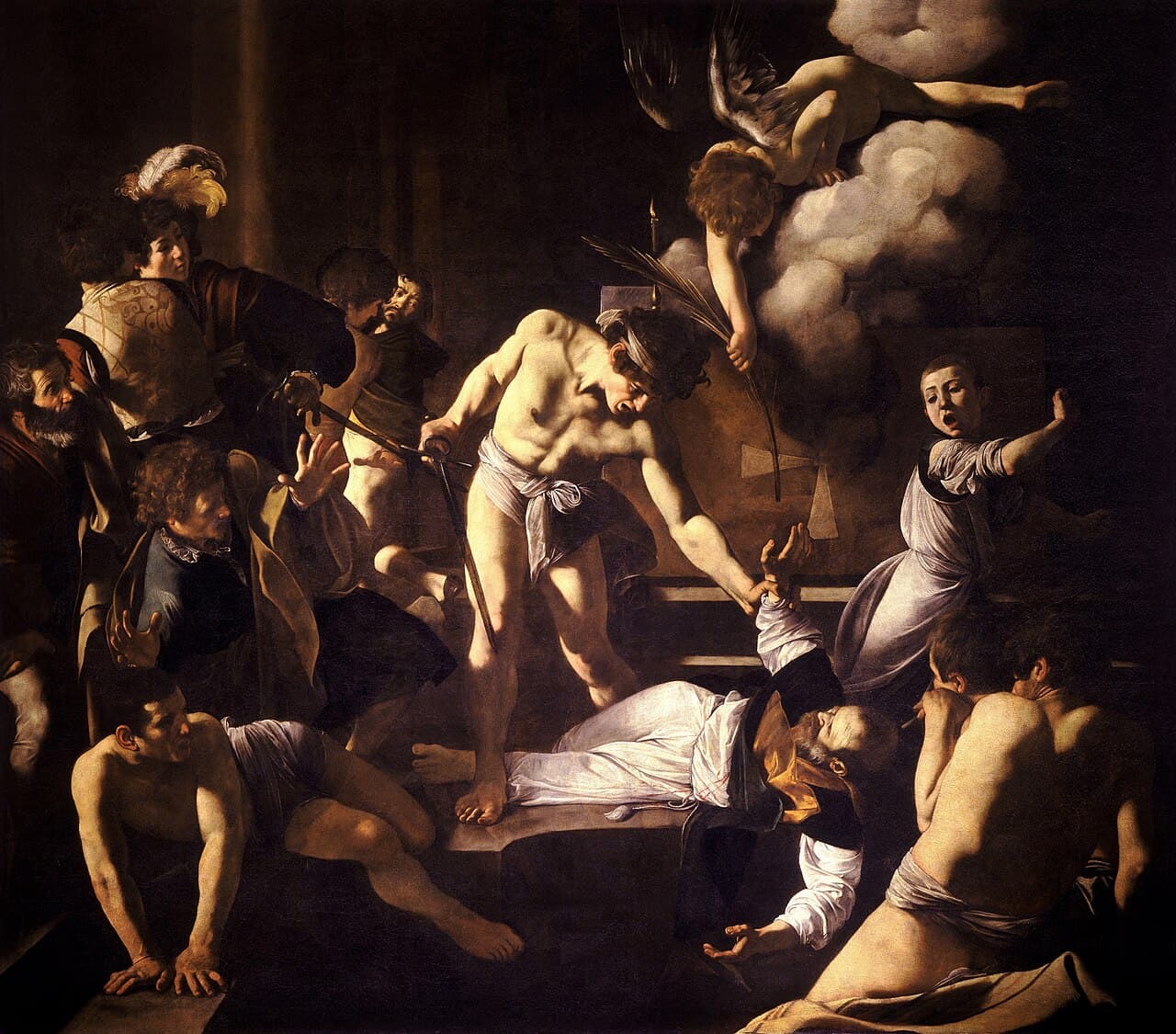
Matthew the tax collector, author of the first Gospel in the canonical order, has one of the most uncertain death traditions of all the apostles. Unlike most of the twelve, who are consistently described as martyrs, Matthew has a significant early tradition that he died a peaceful, natural death — making him one of only two apostles (the other being John) for whom martyrdom is not the universal tradition. Later sources insist on a martyrdom. The sources are in genuine conflict, and historians have not resolved the question.
Who Was Matthew?
Matthew was a tax collector working at a toll station in Capernaum when Jesus called him with two words: 'Follow me.' He is also called Levi, son of Alphaeus, in Mark and Luke. His call is followed immediately by a feast at his house attended by 'tax collectors and sinners,' which provoked the Pharisees and gave Jesus the occasion to say he had come to call sinners, not the righteous. He is traditionally credited with the authorship of the first Gospel, which is directed at a Jewish-Christian audience and makes extensive use of Old Testament quotation and fulfillment. After Acts 1, the canonical record says nothing more about him.
The Traditional Account
The earliest reference to Matthew's post-Pentecost activity comes from Clement of Alexandria (writing around 200 AD), who states, according to Eusebius, that Matthew 'partook of no flesh and ate only seeds, vegetables, and had no meat.' More significantly, Clement appears to indicate — though the passage is debated — that Matthew died peacefully. Heracleon, a Gnostic writer of the late second century, listed Matthew among apostles who did not suffer martyrdom, alongside Philip, Thomas, and Levi.
Later traditions contradict this. From the fourth century onward, various martyrologies assign Matthew a violent death in Ethiopia, Persia, or Pontus. The Ethiopian tradition — which claims Matthew as its apostolic founder — describes him as being killed with a sword or spear while celebrating the Eucharist. The Passio Matthaei, a later Latin text, describes his martyrdom in Naddaver (a location in Ethiopia or Persia, depending on the manuscript).
What Ancient Sources Say
Heracleon (approx. 180 AD), cited by Clement of Alexandria — lists Matthew among those who did not suffer martyrdom; earliest direct statement on the question.
Clement of Alexandria (approx. 200 AD) via Eusebius — possibly implies peaceful death; the passage is textually uncertain.
Rufinus of Aquileia (approx. 400 AD) — assigns martyrdom to Matthew in Persia; later source.
Passio Matthaei (date uncertain) — narrative martyrdom in Ethiopia; late and apocryphal.
The Historical Assessment
The early testimony of Heracleon and possibly Clement in favor of a peaceful death is significant precisely because it runs against the grain of what later sources preferred to claim. There was a theological pressure in the developing church to view all the apostles as martyrs — their deaths were seen as testimony to the resurrection — which makes the survival of the peaceful death tradition for Matthew more, not less, credible as a historical reminiscence.
Most modern historians of early Christianity, including Bart Ehrman, treat Matthew's death as genuinely unknown. The martyrdom accounts are late, geographically inconsistent, and characteristic of hagiographic elaboration. The peaceful death tradition has the virtue of being early and inconvenient to the dominant narrative.
Historical Confidence Rating: UNKNOWN. The question of how Matthew died is genuinely unresolved. An early tradition supports peaceful death; later traditions assert martyrdom. Neither can be confirmed from independent evidence.
Key Ancient Sources
Heracleon (approx. 180 AD) via Clement — Matthew did not suffer martyrdom; earliest direct testimony.
Clement of Alexandria (approx. 200 AD) via Eusebius — possibly implies peaceful death.
Passio Matthaei (late, date uncertain) — martyrdom narrative; apocryphal.
Further Reading
Bart D. Ehrman, Lost Christianities (2003) — analysis of the apostolic traditions and the distinction between early testimony and later hagiographic elaboration.
Graham Stanton, A Gospel for a New People: Studies in Matthew (1992) — historical context of the Matthean community.
This article is part of our series on the deaths of the apostles: Peter, Andrew, James son of Zebedee, John, Philip, Thomas, James son of Alphaeus, Thaddaeus, Simon the Zealot, Judas Iscariot, Matthias, Bartholomew, and Paul.