How Did Matthias the Apostle Die? The Apostle the Sources Forgot
Matthias replaced Judas but left almost no historical trace. What the early sources actually say about his death.
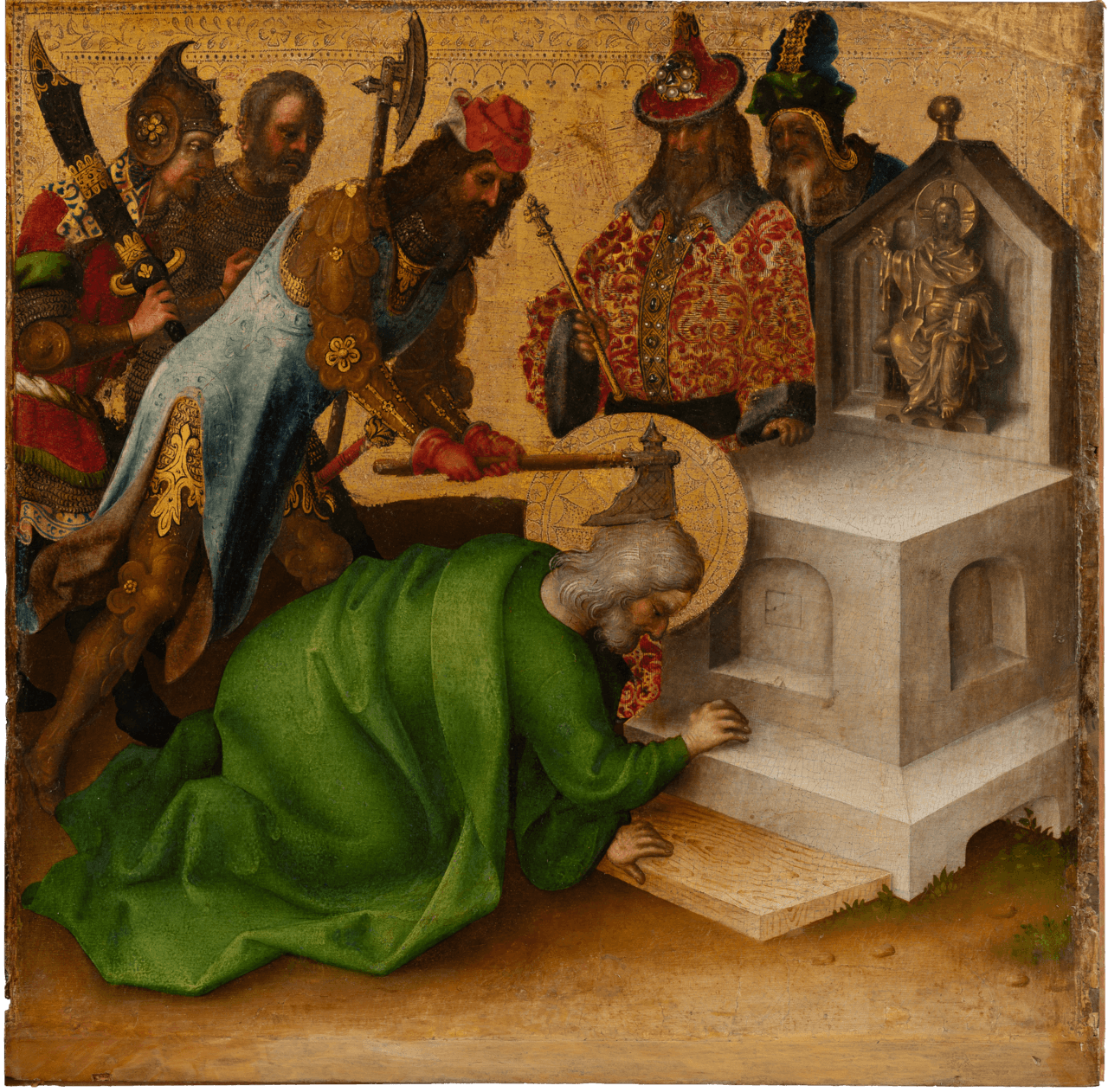
Matthias was elected by lot to replace Judas Iscariot, numbered with the eleven, and then effectively disappears from the historical record. The canonical New Testament says nothing more about him after Acts 1:26. His death tradition is among the latest and least consistently attested of any apostle: different sources send him to Ethiopia, Colchis (modern Georgia), Judea, or Jerusalem, and kill him by stoning, beheading, or crucifixion. There is no early source, no convergence among the late ones, and no archaeological support. What we know about how Matthias died is: nothing reliable.
Who Was Matthias?
Matthias had been a follower of Jesus from the time of John the Baptist's baptism through the ascension — meeting the qualification Peter set for Judas's replacement. He had been present for the whole arc of Jesus' ministry without being among the twelve. When the community nominated two candidates and cast lots after prayer, the lot fell to Matthias. He was added to the eleven. That is the entirety of his canonical record. He is one of two candidates about whom we know the name of the person who was not chosen (Joseph Barsabbas), which adds an unusual poignancy to his selection.
The Traditional Account
The traditions of Matthias's death vary enough to suggest that different communities were simply assigning their preferred apostle to fill the gap. Clement of Alexandria (writing around 200 AD) mentions Matthias briefly in connection with a tradition that emphasizes asceticism, but says nothing about his death. Eusebius of Caesarea, in his Ecclesiastical History, does not address Matthias's death specifically.
Later sources diverge significantly. One tradition, found in hagiographic texts and associated with the Ethiopian church, sends Matthias to Ethiopia and martyrdom there. Another tradition, associated with the Georgian Orthodox church, connects him to Colchis on the eastern Black Sea coast. The most common Western tradition locates his martyrdom in Jerusalem or Judea, where he is said to have been stoned and then beheaded, or alternatively crucified.
The Cathedral of Trier in Germany claims to possess his relics, brought by Helena (mother of Constantine) in the fourth century. The claim is unverifiable but has sustained a pilgrimage tradition for over a millennium.
What Ancient Sources Say
Clement of Alexandria (approx. 200 AD) — mentions Matthias in an ascetic context; does not address his death.
Pseudo-Dorotheus (date uncertain, probably fifth-sixth century) — assigns martyrdom to Matthias; typical of late hagiographic tradition.
Later martyrologies (various dates) — stone and behead in Jerusalem; crucify; location varies by tradition.
The Historical Assessment
Matthias's death tradition is, in the judgment of historians who examine the apostolic martyrdoms, historically empty. There is no early source, and the late sources disagree on geography and method. His absence from the post-Acts canonical record and from the earliest patristic sources means that whatever happened to him, it was either unknown to those writing in the second century or too unremarkable to record.
The Trier relic claim cannot be evaluated on historical grounds alone; relic authenticity is a theological, not historical, category. The geographic spread of the traditions — Ethiopia, Georgia, Judea, Jerusalem — suggests communities claiming apostolic authority rather than communities transmitting a genuine historical memory.
Historical Confidence Rating: UNKNOWN. No reliable early source addresses how Matthias died. The traditions are late, geographically inconsistent, and show signs of filling a gap rather than transmitting a genuine historical memory.
Key Ancient Sources
Clement of Alexandria (approx. 200 AD) — mentions Matthias; nothing on his death.
Pseudo-Dorotheus and later martyrologies (fifth-sixth century AD onward) — varying martyrdom accounts.
Further Reading
Bart D. Ehrman, Lost Christianities (2003) — situates Matthias's obscurity within the broader problem of apostolic traditions.
Wilhelm Schneemelcher, ed., New Testament Apocrypha (1992) — survey of apocryphal traditions including those touching on Matthias.
This article is part of our series on the deaths of the apostles: Peter, Andrew, James son of Zebedee, John, Philip, Matthew, Thomas, James son of Alphaeus, Thaddaeus, Simon the Zealot, Judas Iscariot, Bartholomew, and Paul.